


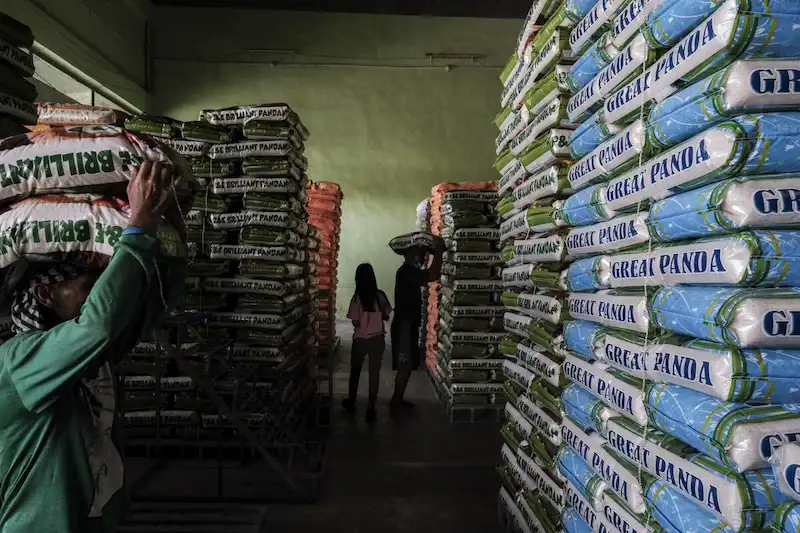


Surging rice prices in the Philippines are posing a warning sign for other major importers of the staple food as the consequences of India's export restrictions continue to reverberate across Asia and West Africa. In August, rice inflation in the Southeast Asian nation rose at the fastest pace in almost five years, bringing back memories of the 2018 shock that resulted in the removal of a two-decade-old import limit. The Philippine central bank has cautioned that it may tighten monetary policy if necessary, while other countries are scrambling to secure their rice supply through diplomacy and deals.
The restrictions imposed by India have disrupted the market and prompted concerned nations to ensure a stable supply to contain the escalating cost of rice, which is a crucial part of the diets of billions of people across Asia and Africa. In response to rising retail prices, Manila has implemented a price cap, which has affected the position of a finance official. Undersecretary Cielo Magno of the Philippines' Finance department has announced her resignation following a Facebook post that seemed to question the newly implemented price limit.
As guaranteeing supply security becomes a top priority for consumers, countries are actively seeking measures to secure their rice supply. Philippine President Ferdinand Marcos Jr. and Vietnamese Prime Minister Pham Minh Chinh have met to discuss a five-year agreement to ensure supply. Senegal has also been making diplomatic overtures to India, following in the footsteps of Guinea and Singapore, among other nations. These efforts are aimed at mitigating potential shortages and price increases.
In addition, Indonesia has recently agreed to sign a supply agreement with Cambodia, marking the first such deal in over a decade. Under this memorandum of understanding, Cambodia will provide up to 250,000 tons of rice per year, more than double the volume of a similar agreement in 2012. Jakarta has also pledged to distribute 10 kilograms of rice per month to millions of impoverished families during the fourth quarter of this year.
Several countries are taking additional measures to control rising costs and ensure stability in their domestic rice markets. Malaysia, for instance, has implemented purchase limits and increased checks on wholesalers and commercial millers due to allegations of unscrupulous practices involving the misrepresentation of local rice as imported rice at inflated prices. Myanmar has also introduced a mandatory system to record rice volumes in storage, aimed at controlling domestic prices and discouraging speculation.
While there has been a slight dip in Asia's rice benchmark this week, prices remain near the highest level since 2008. The uncertainty in the rice market continues to persist, exacerbated by India's export restrictions. As countries navigate this challenging situation, ensuring a stable and affordable rice supply for their populations remains a top priority.