


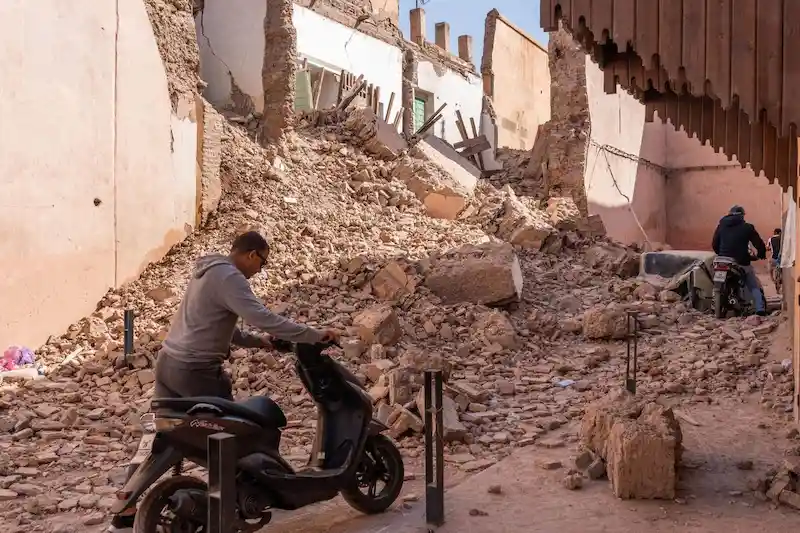


Morocco is reeling from the aftermath of its most powerful earthquake in a century, with the death toll now exceeding 2,900. Rescue teams from both foreign and Moroccan entities are tirelessly searching remote areas in the High Atlas mountains, which was the epicenter of the earthquake on September 8th. The disaster struck just before a devastating storm hit neighboring Libya, causing dams to collapse and triggering floods that claimed the lives of at least 2,300 people.
In addition to the loss of life, the earthquake caused significant damage to parts of Marrakech, one of Morocco's popular tourist destinations. The Interior Ministry reports that 5,530 people have been injured. King Mohammed VI is expected to visit the affected areas in the near future, according to Al-Arabiya.
The urgency is palpable as time is running out to find survivors. Aid organizations like Project Hope, which has deployed rescue dogs to the affected region, are racing against the clock. However, survivors in the devastated villages of the High Atlas mountains are growing increasingly frustrated with what they perceive as a slow domestic response and inadequate aid supplies. Despite numerous international offers of support, Morocco has accepted only a few.
The government has finally made pledges for recovery, including financial assistance for rebuilding homes. Prime Minister Aziz Akhannouch announced that at least 30,000 houses, 500 schools, hospitals, roads, and other infrastructure require reconstruction. Details of the recovery plan, which was instructed by the king, will be unveiled soon. Temporary housing will also be provided for those in need.
Rebuilding efforts may cost between 30 billion dirhams ($3 billion) and 50 billion dirhams. This presents a new crisis for Morocco's economy, which was already grappling with the repercussions of Russia's invasion of Ukraine and the impact of the COVID-19 pandemic on tourism. Without significant donations from Gulf Arab and Western countries to cover these expenses, Morocco may need to borrow more, resulting in an increase in its budget deficit.
Amidst the dire situation, aid pledges continue to pour in. The Red Cross has launched an appeal to raise 100 million euros ($107 million), while the philanthropic arm of Binance has announced a plan to airdrop up to $3 million in BNB coins to users living in the affected areas.
According to UNICEF, an estimated one-third of the 300,000 people displaced by the earthquake are children, who are now without access to schools and medical facilities. The situation is particularly challenging as there are many orphaned children and displaced children who have lost contact with their parents.
The earthquake has also taken a toll on Morocco's rich cultural heritage. The UNESCO-listed center of Marrakech has been damaged, and other historic sites in the quake zone, including the Tinmel mosque, Saadi tombs, and Badii Palace, have reported serious damage.
The road to recovery for Morocco will be long and arduous. With the country already facing economic challenges, the support of international allies and donors will be crucial in enabling Morocco to rebuild and heal from this devastating earthquake.