


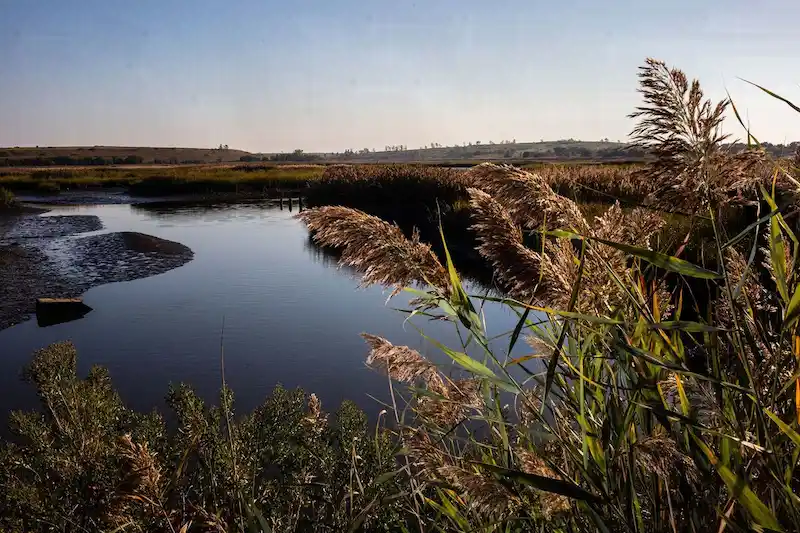


From rubbish to recreation, Freshkills Landfill in Staten Island has undergone a remarkable transformation. Once the world's largest dump, it is now being converted into a sprawling urban park. The park's latest addition, North Park, opened its doors to the public last weekend, offering a glimpse into the impressive revitalization efforts.
Freshkills was designated as a landfill site after World War II, when wetlands were sacrificed for the disposal of New York City's trash. It was supposed to be a temporary solution, with plans to build housing on the site after just three years. However, as the city's population continued to grow rapidly, Freshkills became the final resting place for an astonishing 29,000 tons of garbage each day. The landfill expansion consumed vast amounts of land and caused an overwhelming stench, leading to numerous lawsuits.
Recognizing the need for change, New York City made the decision to close Freshkills in 2001 and embark on an ambitious project: converting the landfill into a park. The ultimate goal was to transform this wasteland into a haven for nature and public recreation.
The challenges in repurposing a landfill site are numerous. Garbage compacts over time, leading to uncertain and shifting surface conditions. To overcome this, Freshkills Park has employed innovative techniques. In North Park, for example, the landfill has been reshaped into four hills surrounding a picturesque tidal creek, which is now open for kayaking. Layers of soil, sand, and plastic lining have been placed atop the garbage to prevent toxic leaks. Additionally, a vent layer ensures that any escaping landfill gas, a combination of methane and carbon dioxide, is captured in pipes and directed to a purification plant.
The environmental benefits of the Freshkills transformation are significant. Methane, a potent greenhouse gas, is released from landfills if not properly managed. However, beneath the surface of the 2,200-acre park, a sophisticated gas collection system extracts the landfill gas and sends it to a purification plant. Here, the methane is removed, and the purified biogas is sold to the local utility. It is estimated that 1.5 million cubic feet of this treated biogas is distributed to Staten Island homes for cooking and heating, reducing reliance on traditional natural gas sources.
The opening of North Park marks yet another milestone in the ongoing revitalization of Freshkills. It offers a glimpse into the ambitious vision of creating a natural oasis out of what was once an environmental blight. As Mark Murphy, the administrator for Freshkills Park, explains, "The biggest challenge posed by developing our park on a former landfill is managing the expectations between what we as a community want and what the land is realistically able to be used for."
Despite the challenges, there is hope. With over 500 former US dumps successfully converted into energy projects that utilize landfill gas, Freshkills stands as a shining example of what can be achieved. It serves as a reminder of the importance of responsible waste management, transforming a once-polluting site into a space that benefits the environment and the local community in multiple ways. By reclaiming and repurposing landfills, we not only reduce pollution but also create opportunities for open spaces, recreation, and sustainable energy production.