


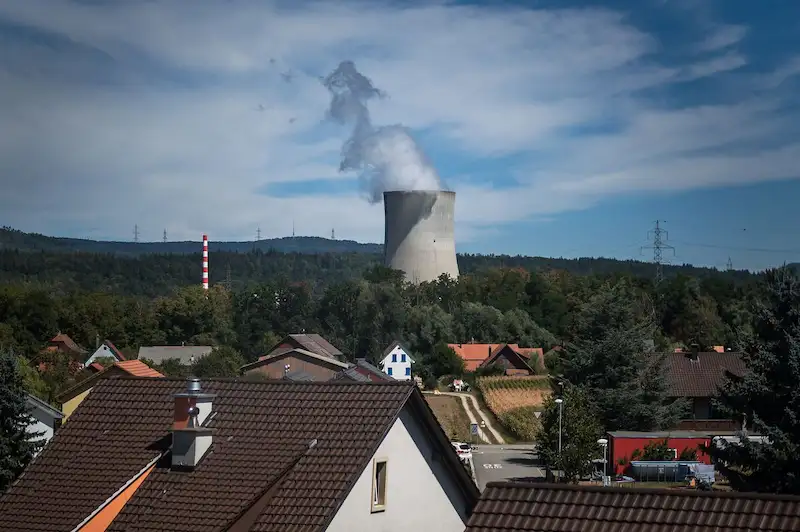


In a surprising turn of events, Switzerland has decided to extend the lifespan of its nuclear power plants due to concerns over potential electricity shortages. The country had previously made the decision to phase out nuclear power in 2017, but did not set a definitive date for the closure of its four plants. Instead, the plants were to continue operating as long as they were deemed safe. However, operators Axpo Holding AG and Alpiq Holding AG have now announced plans to extend the planned lifespan of their plants from 50 years to 60 years, which would mean operation until around 2040, according to company spokespeople.
Interestingly, Alpiq is even considering the possibility of further extending the lifespan of its plants to as many as 80 years. This move reflects a trend that can be observed across Europe, as several countries are revisiting the potential of atomic energy and reconsidering the closure of their nuclear power plants. In fact, more than 90% of existing nuclear reactors in the United States are likely to seek approval to operate for 80 years or longer.
Switzerland allows nuclear power plants to continue running as long as they can be operated safely. The government never established a specific exit date for nuclear power, and all calculations regarding the plants' lifespan are made by the respective operators. According to a survey conducted by the companies, it is economically feasible to extend the lifespan of the power plants beyond 60 years without financial support from the government.
This development in Switzerland is not an isolated case. Other European countries, such as France, Belgium, and Finland, are also considering extensions for their nuclear reactor fleets. These nations anticipate an increase in electricity demand and believe that relying solely on renewable energy sources may not be sufficient to meet this demand. Additionally, countries like Romania, Bulgaria, and Slovenia have plans to construct new nuclear power plants, indicating a growing interest in nuclear energy across the continent.
However, Germany has taken the opposite approach. The country recently shut down its last nuclear power plants in April after years of political debate and deliberation. The decision to phase out nuclear power in Germany has had a significant impact on the country's economy and energy sector.
The recent decision by Switzerland to extend the lifespan of its nuclear power plants highlights the shifting attitudes toward nuclear energy in Europe. As concerns over energy security and electricity shortages persist, countries are reconsidering their reliance on renewable energy sources alone. Nuclear power, with its consistent and reliable output, is seen as a viable option to meet growing demand. Nonetheless, the debate surrounding the safety, environmental impact, and long-term sustainability of nuclear energy continues to divide opinions globally.