


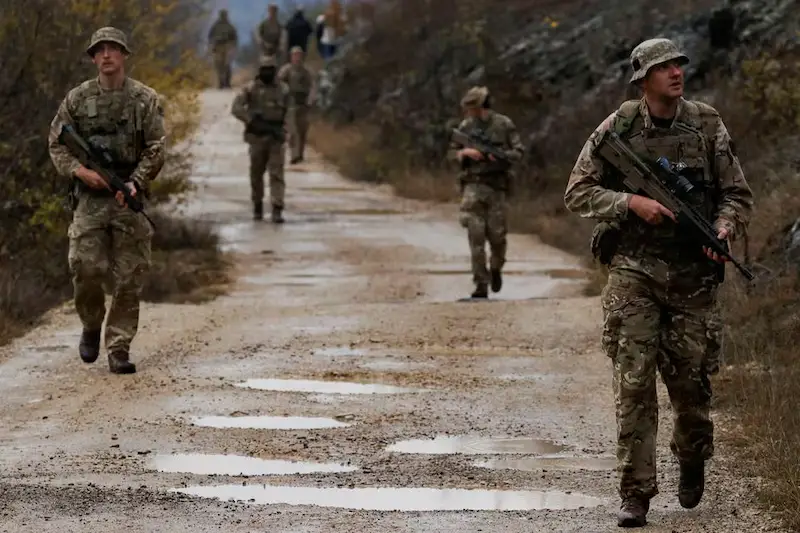


British troops have been deployed to the Kosovo-Serbia border amidst rising concerns of potential conflict between the two former wartime foes. NATO has increased its peacekeeping presence in Kosovo following a series of violent incidents in recent months. In particular, a confrontation between authorities and armed Serbs in September turned a once quiet village into a war zone, resulting in casualties on both sides. To prevent further escalation, NATO has sent hundreds of additional forces, including troops from Britain and Romania, bringing the total number of peacekeepers in the region to 4,500 from 27 countries.
The violent incident in the village of Banjska prompted Kosovo to accuse Serbia of providing support, both financial and practical, to the armed gunmen. However, Serbia has vehemently denied these allegations. In response, NATO is reviewing whether a more permanent increase in forces is necessary to prevent a potential violent conflict in not only Kosovo but the wider region as well. Secretary-General Jens Stoltenberg, during a visit to the western Balkans, emphasized the need to maintain control and stability in the face of growing tensions.
The British soldiers currently deployed along the Kosovo-Serbia border are working in challenging conditions, enduring freezing temperatures during their 18-hour shifts. Their main objective is to ensure that no weapons or armed groups cross the border into Kosovo. Lieutenant Joss Gaddie, a British Army officer, stated that their routine patrols involve gathering intelligence on any illegal or suspicious activities, which is then reported to the NATO mission and higher authorities.
The ongoing conflict between Kosovo and Serbia dates back decades, with Kosovo declaring independence from Serbia in 2008 following a guerrilla uprising in the region and a NATO intervention in 1999. While Kosovo has an ethnic Albanian majority, approximately five percent of the population identifies as ethnic Serbs, with half residing in the northern part of Kosovo. These ethnic Serbs refuse to recognize Kosovo's independence and consider Belgrade as their capital. Consequently, clashes between Kosovo police, international peacekeepers, and the ethnic Serb population have been frequent.
In an effort to exert control and authority, Kosovo's Prime Minister Albin Kurti's government has set a deadline of December 1 for around 10,000 motorists to register their vehicles with Kosovo license plates. Those who fail to comply may face severe penalties. This requirement has sparked violence in the past, and tensions are expected to rise again. Such actions further exacerbate the existing divide between the ethnic Albanian and Serb populations within Kosovo.
As the situation remains fragile and the potential for conflict persists, NATO's increased presence in Kosovo serves as a deterrent and a means to maintain stability. The deployment of British troops underscores the alliance's commitment to supporting peacekeeping efforts in the region. It is hoped that these measures will help deescalate tensions and prevent a return to open conflict between Kosovo and Serbia.