




The Social Democrats (SPD) in Germany have outlined their priorities for the upcoming election campaign, including plans to increase taxes on the rich and loosen borrowing restrictions. At a party congress in Berlin, SPD Co-leaders Saskia Esken and Lars Klingbeil criticized the opposition parties for their populist and damaging actions. Klingbeil argued that the constitutional limit on net new borrowing, known as the debt brake, has become a risk to Germany's prosperity and needs to be changed to enable investments in the country's future.
While the proposed tax hikes and increased borrowing are not expected to take effect before 2025, when the current term of the ruling coalition ends, it indicates a focus on the next national election in fall of that year. The SPD, along with the Greens and the Free Democrats, have been in office for two years but are increasingly hindered by disagreements over spending priorities. In addition, a recent budget ruling by the nation's top court has further fueled infighting within the coalition.
Support for the coalition parties has waned, with the conservative CDU/CSU alliance leading in opinion polls, followed by the far-right Alternative for Germany party. The SPD and the Greens are trailing behind, and the FDP's support has dropped close to the parliamentary threshold. In response to this decline, the SPD is set to adopt an informal election campaign manifesto, which includes a call for a cut in income tax for most employees and an increase for the top 5% of the wealthiest citizens.
The party also aims to relax the debt rules, which could potentially mobilize an additional €100 billion ($107 billion) of investment annually, primarily from private investors. A significant portion of the public funds would be allocated through a new fund, facilitating collaboration between the state and private investors in infrastructure upgrades and supporting the transition to renewable energy. The goal is to create a million well-paid jobs by the end of the decade.
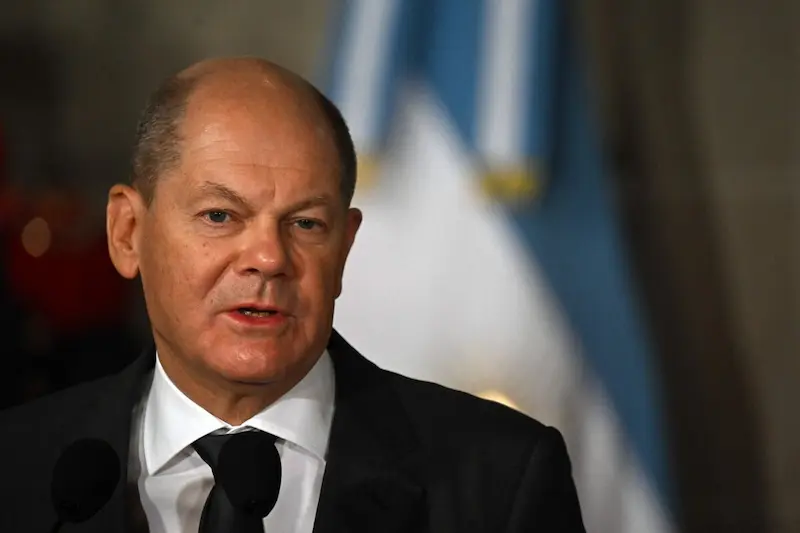
Chancellor Olaf Scholz is scheduled to address the congress on Saturday, where delegates eagerly anticipate updates on efforts to address the €17 billion budget deficit resulting from the court ruling. Scholz, along with Greens Economy Minister Robert Habeck and FDP Finance Minister Christian Lindner, have agreed to resume discussions on a revised 2024 finance plan. However, Lindner has expressed opposition to tax increases and further suspension of borrowing restrictions next year. Negotiations are expected to continue, with a goal of reaching an agreement on the 2024 budget.
Several officials from the SPD and the Greens have called for an emergency suspension of the borrowing limit in 2024, citing Russia's military actions in Ukraine and the decision to provide additional military aid to Kyiv as justifications. Talks will continue over the weekend, with hopes of finalizing an accord on the 2024 budget. This agreement, if reached, will be presented to the media by Scholz, Habeck, and Lindner on Monday morning.