


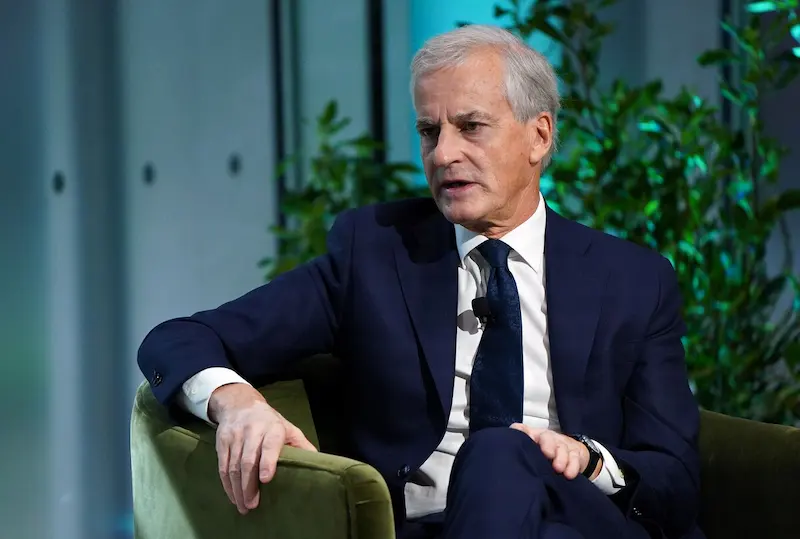


Norway's Prime Minister, Jonas Gahr Store, believes that the country's economy is on track for a soft landing, despite facing higher borrowing costs. He attributes this optimistic outlook to high levels of investment and a strong labor market that have helped cushion the impact of rising interest rates. Gahr Store points out that even though interest rates have been "taking down the temperature" in the economy, he is reassured by an employment rate of 70% and central bank forecasts of increased purchasing power from next year.
This positive assessment comes at a time when other Nordic economies are facing a more gloomy outlook. Finland's central bank recently predicted two consecutive years of recession, joining its Swedish counterpart in this somber prediction. In contrast, Norway's central bank projected a marginal 0.1% gain for the mainland economy in 2022, with a contraction expected in the first quarter.
Gahr Store highlights the significant level of investment currently underway in the Norwegian economy, stating that it is stabilizing at a higher level than in previous years. Additionally, the country boasts low unemployment and a high level of employment, which provides a solid foundation for what Gahr Store describes as a "soft landing." However, he acknowledges that a contraction cannot be completely ruled out due to the heightened uncertainty caused by events such as the war in Ukraine and the Israel-Hamas conflict.
Last week, Norges Bank surprised regional analysts by raising its key policy rate to 4.5%, a level it plans to maintain until autumn 2024. The bank cited a weaker krone, which makes it more challenging to control inflation, as the reason behind this decision.
Despite these positive indicators, there are concerns regarding the vulnerability of Norwegian households to higher credit costs. Norway has one of the highest levels of debt globally, with a significant number of variable-rate loans. Gahr Store acknowledges this risk, but argues that the low unemployment rate helps offset the potential vulnerability. He explains that a combination of high interest rates, high debt levels, and high unemployment would create a toxic mix, but with low joblessness, he believes the situation is more manageable.
In conclusion, Prime Minister Gahr Store remains optimistic about Norway's economy, considering the current level of investment, low unemployment rate, and favorable forecasts for purchasing power. However, he remains cautious due to the uncertainties posed by international conflicts. While Norway's economy seems to be heading for a soft landing, the vulnerability of households to higher credit costs remains a concern that needs to be monitored closely.