


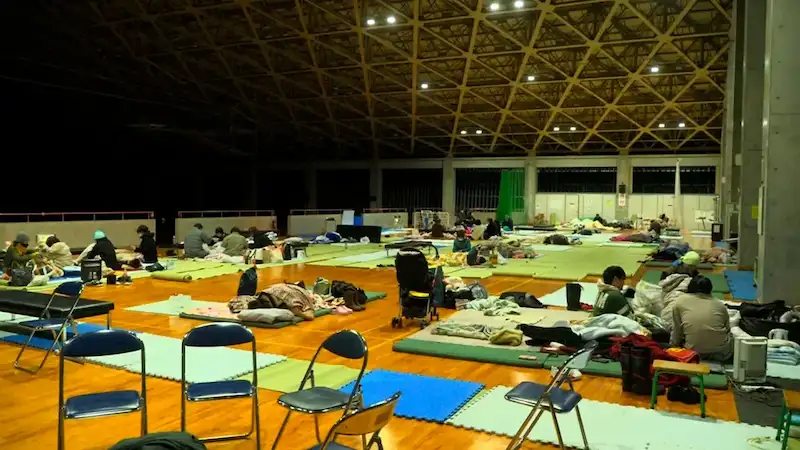


Survivors of the devastating 7.5 magnitude earthquake that struck Ishikawa prefecture in Japan are enduring freezing conditions and limited relief in makeshift shelters. Minae Akiyama, one of the survivors, described the panic she and her family felt as the ground shook beneath them. They sought shelter under a table, prayed for their survival, and ultimately made it outside with essentials. Although her family is unharmed, the trauma of the earthquake and frequent aftershocks continue to haunt them.
The death toll from the earthquake stands at least 73, with authorities still searching for those missing and trapped under rubble or in isolated areas. Ishikawa Prefecture's official website states that the number of missing individuals is still being determined. While 70 people were rescued overnight, rescue efforts are ongoing as officials rush to deploy rescue dogs for further assistance.
The Noto Peninsula, a rural area on the western side of central Japan, lashed by the quake, witnessed not only a seismic disaster but also triggered tsunami alerts, fires, and collapsed buildings. Photos showing multi-story buildings toppled onto their sides, burnt structures, and heaps of rubble where homes once stood have emerged. The destruction has severely impacted the region's infrastructure. Roads around the peninsula remain blocked, making it a major challenge for relief vehicles to access affected areas.
For some survivors, the memories of the 2011 Tōhoku earthquake and tsunami resurfaced. The magnitude 9.0 earthquake and its aftermath resulted in more than 22,000 deaths or missing individuals, with the Fukushima nuclear meltdown compounding the devastation. Monday's earthquake, while destructive itself, does not compare to the scale of the previous disaster. Japan, a country familiar with earthquakes, has stringent building codes, even in remote regions. While the damage assessment is still underway, the country's preparedness has limited the death toll and extent of destruction.
Kouki Takahashi, who experienced both the 2011 Tōhoku disaster and the recent earthquake, recalled that the trembling was more intense this time. He hurriedly left his home, which was still standing but showed signs of damage, and spent the night sleeping in his car. Many others have also sought shelter, but relief is limited. The shelters provide only a roof, leaving survivors to endure freezing temperatures with no heating. Lack of running water has compelled people to queue outside to receive water distributed by the Japan Self-Defense Forces.
Prime Minister Fumio Kishida stated that local governments, police, fire departments, and the military are working together to coordinate search and rescue operations. However, more than 36,000 households remain without power, and communication services have been disrupted. Helicopters are being employed to gather vital information due to the impact on phone services.
As survivors anxiously await relief and assistance, the memories of the earthquake continue to haunt them, and the road to recovery appears arduous. The resilience of the Japanese people shines through as they navigate the challenges posed by this recent disaster.