




NASA has announced a significant delay in its much-anticipated mission to land American astronauts on the moon. The Artemis program, which aims to return humans to lunar soil, is facing mounting technical challenges that have necessitated a postponement of approximately one year. Originally slated for late 2025, the first lunar landing mission, known as Artemis III, is now rescheduled for September 2026, according to NASA. Additionally, the precursor mission, which intends to send humans into deep space and orbit the moon - a feat not accomplished in over half a century - has also been pushed back to September 2025 from its initial target of November 2024.
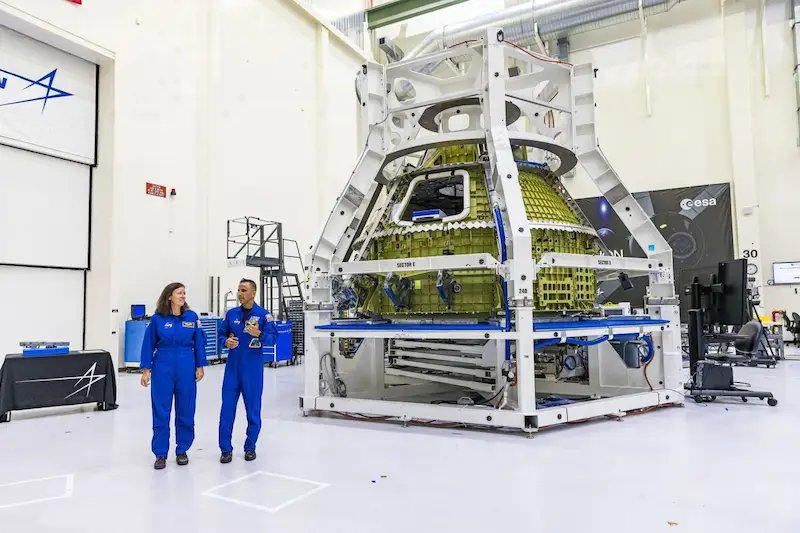
The primary issues contributing to the delay are the ambitious timelines set by the agency and the complex strategy of relying on multiple spacecraft developed by various companies, including Elon Musk's SpaceX, Jeff Bezos' Blue Origin, and Lockheed Martin Corp. NASA's associate administrator, Jim Free, mentioned that the Artemis team is actively addressing these challenges to ensure a successful mission. However, technical difficulties with Lockheed's Orion capsule, which will transport astronauts to deep space, have emerged. Engineers discovered issues with the vehicle's heat shield and internal components after analyzing data from the Artemis I mission, leading to necessary modifications in the spacecraft's design.
In addition to the troubles with Orion, NASA is also grappling with the development of new spacesuits and Elon Musk's Starship rocket, both integral parts of the Artemis program. The spacesuit development has encountered its share of hurdles, while the Starship relies on a groundbreaking technique that involves propellant transfer between spacecraft in orbit. These factors have contributed to the need for a more realistic timeline for Artemis III, as acknowledged by Jim Free.
Meanwhile, SpaceX has announced its next steps in the Starship project. Jessica Jensen, a SpaceX executive, shared with reporters that the company expects to receive a license from the Federal Aviation Administration for a third Starship test launch, likely to take place in February. SpaceX's involvement in the Artemis program highlights the collaboration between government and commercial entities in pursuing ambitious space exploration goals.
Though the delay in the Artemis program is disappointing for those eagerly anticipating the return of humans to the moon, it is crucial for NASA to address the technical challenges and ensure a safe and successful mission. The agency's commitment to resolving these issues reflects the complexity of space exploration endeavors and the dedication required to achieve remarkable feats. As NASA and its commercial partners continue to forge ahead, the dream of a lunar landing and deep space exploration becomes one step closer to reality.