


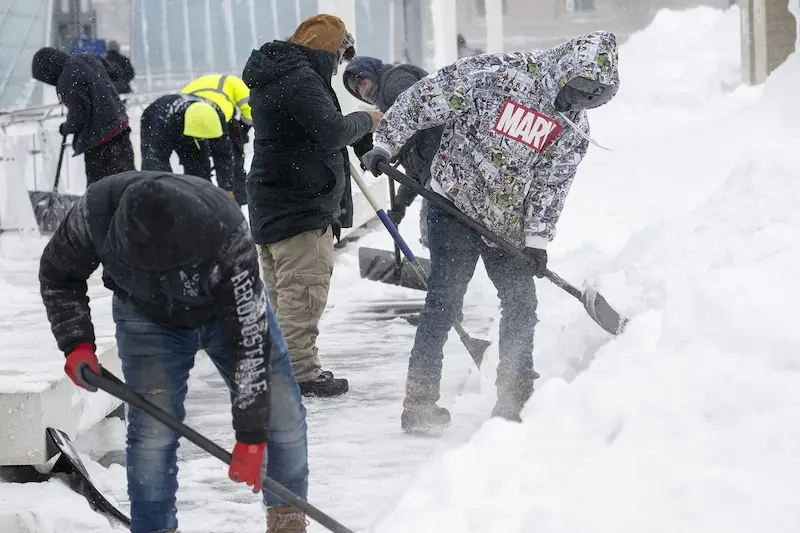


As a powerful winter storm sweeps across the US, a wide swath of the country is experiencing extreme cold temperatures that have brought sleet, snow, and freezing rain. Even places as far south as Texas are feeling the brunt of this freezing weather, testing their power grid and disrupting daily life. In a surprising turn of events, Buffalo, known for its resilience in the face of winter weather, has been forced to postpone a scheduled NFL game due to the hazardous conditions.
Starting on Saturday, the Midwest and Great Lakes regions will be hit by heavy snowfall and blizzard-like conditions. Following closely behind the storm is an Arctic blast that will freeze areas from Denver all the way to New York during the three-day Martin Luther King Jr. holiday weekend, as predicted by the National Weather Service.
As a result of the impending storm, the Pittsburgh Steelers and Buffalo Bills wildcard playoff game, scheduled for Sunday, has been rescheduled to Monday afternoon. The storm is expected to bring two feet of snow and gusts reaching up to 65 miles per hour, making travel extremely dangerous. New York Governor Kathy Hochul has urged people to prepare and stay off the roads.
The region faced its deadliest winter storm in decades last year, with many people being trapped in their homes, cars, and workplaces for days. The severity of these storms calls for extra caution and preparedness to ensure the safety of individuals.
In the Midwest, temperatures are expected to plummet to sub-zero levels, potentially breaking low temperature records. The weather service warns that temperatures as low as minus-50F (minus-46C) could be experienced in the Dakotas. As the storm moved across Wisconsin and Michigan on Saturday, thousands of people were left without power.
The storm's arctic air will move east and southward, causing temperatures to drop in rain-soaked New York City. The East Coast, from Washington to Boston, will also experience expanding snowy conditions. The frigid blast will make its way further south, impacting Arkansas, southern Missouri, and the Appalachians. Texas is also preparing for below-freezing temperatures along with the possibility of snow and ice. The state is cautious due to the potential strain on the electricity demand, which could reach an all-time high.
Authorities in Texas assure residents that they are better prepared this time around, as compared to the 2021 winter storm that led to a massive power failure. Governor Greg Abbott emphasizes that the state's power generators have never been more prepared for a winter event and have a secondary source of fuel available.
In addition to the extreme cold, the West Coast is facing the threat of scattered flash flooding in parts of California and Oregon, adding to the challenges brought on by this tumultuous weather pattern. Some areas may be drenched with rainfall ranging from 3 to 5 inches.
As the winter storm continues its journey across the country, it is imperative for residents to prioritize safety, stay informed about weather updates, and follow guidance from local authorities. Taking necessary precautions can help mitigate the potential risks and ensure the well-being of communities affected by this prolonged period of frigid temperatures.