


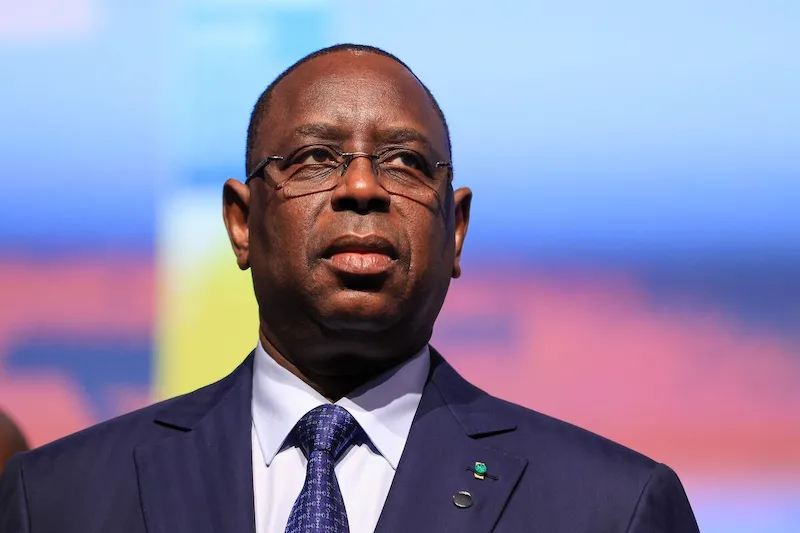


In a surprising turn of events, Senegal has decided to postpone its presidential elections following widespread criticism regarding the disqualification of opposition candidates. Lawmakers have ordered an investigation into the validation process after doubts were raised about the independence of two judges at the Constitutional Council, which finalized the list of 20 eligible candidates for the February 25 elections. President Macky Sall made the announcement without setting a new date for the elections.
President Sall acknowledged the escalating dispute between the National Assembly and the Constitutional Council, highlighting allegations of corruption involving the council's judges. He expressed concern over the country becoming embroiled in another crisis as it still bears the scars of past violence. The decision to delay the elections marks a significant setback for Senegal, a country that has experienced four peaceful transitions of power since gaining independence from France in 1960.
The political turmoil and electoral uncertainty may have adverse effects on Senegal's economy, which is projected to witness its fastest growth in nearly five decades. Investors may be deterred by the instability and cautious about committing resources. Maurice Soudieck Dione, an associate professor in political science at Gaston Berger University, expressed concern over President Sall potentially extending his rule beyond his mandate, describing it as a constitutional coup and undermining his legitimacy.
Prominent opposition figures, such as Ousmane Sonko and Karim Wade, were excluded from the list of candidates challenging Prime Minister Amadou Ba, the ruling party's nominee. The omission of these candidates, particularly Sonko, who posed the greatest threat to the ruling coalition, has raised questions about the integrity of the electoral process. Human Rights Watch had previously expressed concerns about the crackdown on dissent and the targeting of Sonko's supporters, further undermining the credibility of the vote.
Abdou Latif Coulibaly, a government secretary, resigned following the postponement of the elections. Coulibaly's resignation came in the wake of President Sall's address and the events unfolding in the National Assembly. The resignation signals a deepening political crisis within the country. This latest development follows a series of challenges and controversies surrounding the electoral process, raising concerns about democratic governance and transparency in Senegal.
Both Sonko and Karim Wade have faced legal issues in the past. Sonko was disqualified from the race after being convicted of libel, while Wade is the son of former President Abdoulaye Wade. Despite their exclusions, they have been influential figures in Senegalese politics and have garnered substantial support among the population. Their absence from the candidate list will undoubtedly have a significant impact on the electoral landscape.
As Senegal grapples with these unprecedented challenges, President Sall has reiterated his commitment to stepping down after the elections. The Senegalese Democratic Party, led by Karim Wade, has called for a six-month postponement of the vote, citing irregularities in the validation process.
Senegal's economy had been expected to flourish this year, buoyed by the upcoming $4.8 billion gas project known as the Greater Tortue Ahmeyim. However, the delay in the elections and the resulting political instability may hinder investments and impede economic progress. The international community will be closely monitoring the situation in Senegal, hoping for a swift resolution and a return to stability.