


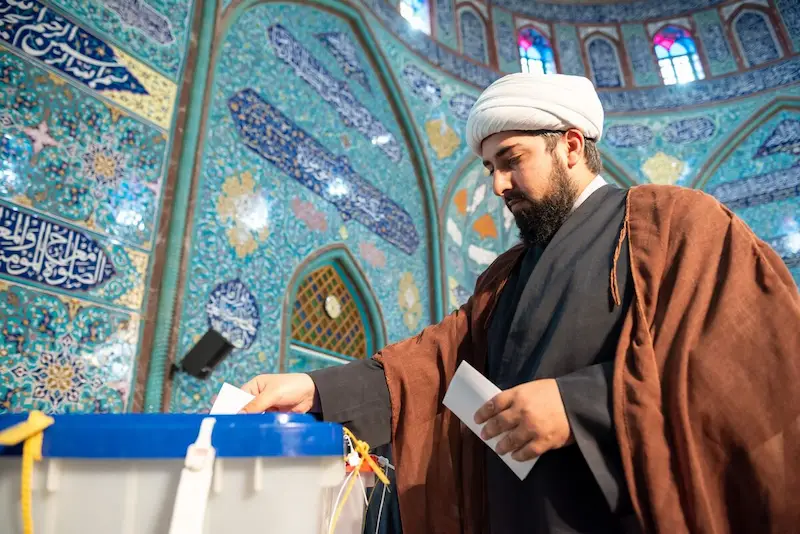


Iran's recent parliamentary elections saw a significant decline in voter participation, with estimates indicating historic lows in turnout. Reports from state-run media suggest that only around 41% of eligible voters, approximately 25 million Iranians, cast their ballots in the election held on Friday. This turnout figure marks a new low point for parliamentary elections in the Islamic Republic, falling slightly below the 42% turnout recorded in the previous election in 2020.
Despite the low turnout, authorities in Iran have hailed the election as a success for the ruling establishment. The results are expected to align the next Iranian parliament closely with the hard-line government of President Ebrahim Raisi. Raisi himself claimed that the election had thwarted an alleged plot by enemies to discourage participation, although no evidence was provided to support this assertion. State-run media in Iran depicted the turnout as "epic" and emphasized the importance of citizens participating in the electoral process.
The diminishing voter engagement in Iran reflects a growing sense of disillusionment among the population, who view participating in elections as a sign of support for a government they hold responsible for economic hardships, declining living standards, and crackdowns on dissent. The lackluster turnout may also be attributed to a general apathy towards the political system and its inability to address the needs and concerns of the people. The elections were seen as a test for the authorities, who sought to boost participation by relaxing voting requirements and allowing citizens to use their national ID cards instead of traditional identity booklets.
In addition to the parliamentary elections, Iranians also voted for the Assembly of Experts, a body of 88 Islamic jurists that plays a crucial role in selecting and removing the supreme leader. President Raisi secured re-election to the assembly from his hometown of Mashhad, consolidating his influence within the country's power structures. However, notable figures such as former President Hassan Rouhani and ex-President Mohammad Khatami chose to boycott the elections, underscoring the divisions and challenges within Iran's political landscape. The outcomes of these elections will likely shape the country's future trajectory and the dynamics of its leadership.