


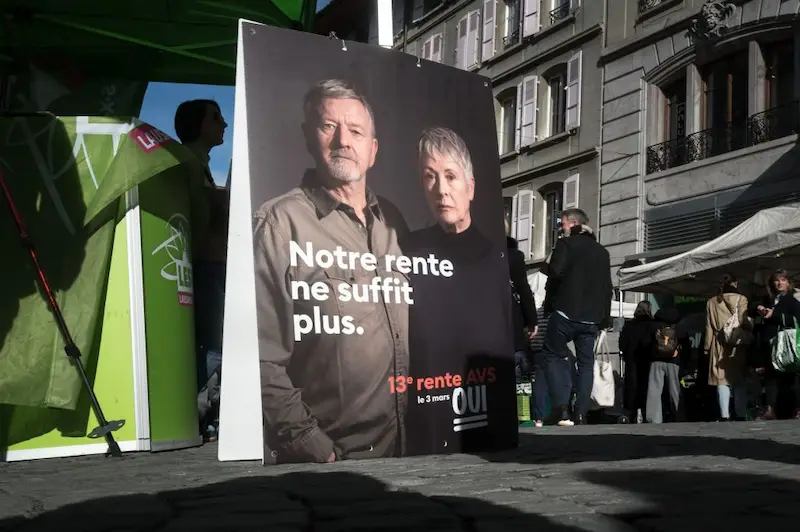


In a historic decision that marks a significant shift in Swiss social policy, voters have overwhelmingly supported a groundbreaking proposal to boost pensions through a popular vote. This marks the first time in Switzerland's history that social benefits have been increased via plebiscite, with the proposal to introduce a 13th annual payout to pensioners receiving strong backing from 58.2% of the electorate.
The approved measure, which will see pensions increase by approximately 8%, addresses the concerns raised by labor unions regarding the dwindling purchasing power of pensions due to the rising costs of living. This victory for pensioners signifies a turning point in a country where such proposals have historically faced staunch opposition, particularly from bourgeois parties and business associations.
Political analyst Georg Lutz described the approval as a "watershed moment for Switzerland," highlighting the significant shift in public sentiment over the years. The sentiment of demanding their fair share was echoed by Michael Hermann, head of the pollster Sotomo, who suggested that recent corporate scandals and financial crises may have played a role in influencing the outcome of the vote.
The proposal to raise the retirement age and tie it to life expectancy, however, was met with strong resistance, receiving only 25.3% of votes. This rejection indicates a clear preference among the Swiss electorate for immediate improvements to social benefits rather than future adjustments that may impact retirement planning.
While the approved pension increase is set to come into effect from 2026, the government now faces the challenge of finding the estimated additional annual cost of 4.1 billion Swiss francs ($4.7 billion). Finance Minister Karin Keller-Sutter has hinted at potential value-added tax hikes to cover the deficit, sparking concerns among some lawmakers about the implications for future generations.
Ultimately, the resounding support for this pension boost underscores the growing importance of social welfare and economic equality in Swiss society. With turnout exceeding 58% and strong backing from French- and Italian-speaking regions, the vote reflects a collective desire for a fairer and more secure retirement system. Interior Minister Elisabeth Baume-Schneider affirmed the significance of the decision, emphasizing the public's genuine concern for ensuring a stable and prosperous future for all citizens.