


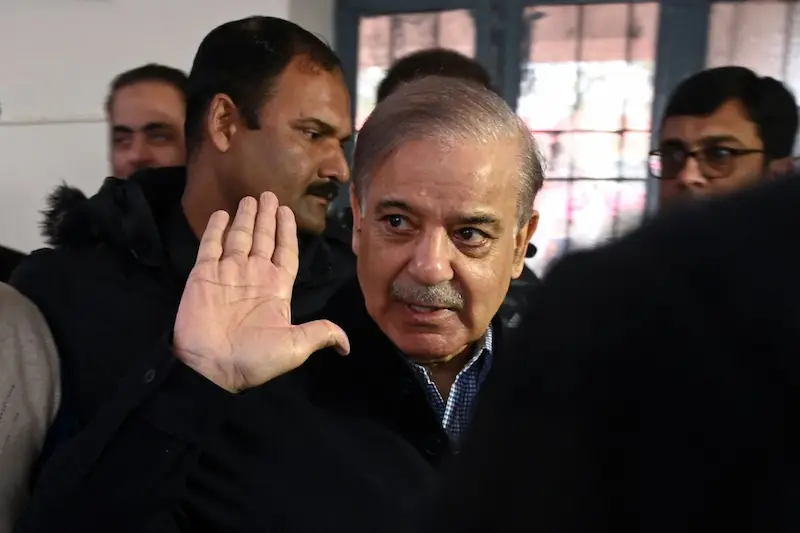


In a strategic move to block Imran Khan's party from power, two traditional political parties in Pakistan have joined forces to select Shehbaz Sharif as the country's next prime minister. The decision came after an inconclusive election result last month, where no single party secured a clear majority. Sharif, who previously held the position until parliament was dissolved in August, received 201 votes in the National Assembly, securing his role as the premier once again.
The coalition that backed Shehbaz Sharif comprised the Pakistan Muslim League-N, led by his elder brother Nawaz Sharif, and the Pakistan Peoples Party, co-chaired by Bilawal Bhutto Zardari. This alliance marks a strategic maneuver to prevent Imran Khan's Pakistan Tehreek-e-Insaf party from securing the top position, despite winning the most seats in the election. Khan's party refused to form a coalition, alleging rigging in the polls, which was denied by the election authorities and caretaker government.
With the country's economy in a fragile state, Shehbaz Sharif's new government will face the immediate task of seeking a substantial loan from the International Monetary Fund, with the current program set to end in April. Sharif has acknowledged the need for a fresh loan of at least $6 billion and emphasized the necessity of implementing significant reforms to tackle Pakistan's debt crisis.
Sharif, known for his economic policies during his previous tenure, is focused on reducing the country's debt burden gradually. This includes targets for increased lending by banks, subsidies for farmers, and investments in agricultural development to boost yields. His past efforts to secure a $3 billion loan program and implement unpopular measures like removing fuel subsidies demonstrate his commitment to meeting IMF conditions.
The nomination of Shehbaz Sharif as prime minister also underscores his close relationship with the military, a key player in Pakistan's political landscape. Despite challenges, Sharif's experience and vision for economic reform position him as a pivotal leader in navigating Pakistan's complex financial situation. His alliance's agreement to nominate Asif Ali Zardari and the opposing camp's choice of Mahmood Khan Achakzai for the upcoming presidential election showcase the intricate political dynamics at play in the country.