


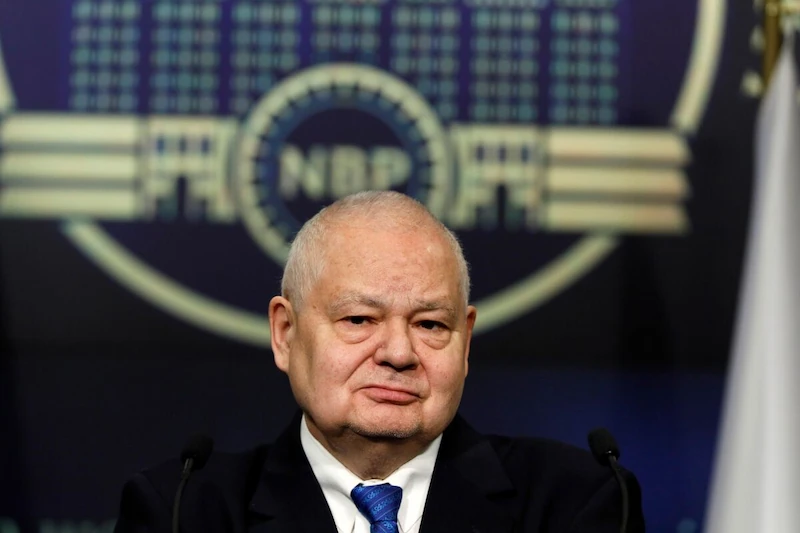


The ruling coalition in Poland has initiated a process to potentially remove the central bank chief, Adam Glapinski, prompting accusations of political bias. Glapinski, an ally of the previous administration and the governor of the National Bank of Poland, faces allegations of providing misleading information regarding central bank profits, irregularities in bond purchases, and engaging in partisan politics. Prime Minister Donald Tusk and his supporters have criticized Glapinski for his alleged ties to the previous ruling party and his failure to address soaring inflation.
Lawmaker Tomasz Trela denounced Glapinski's alleged politicization of the central bank, stating that it had become a stronghold for the previous ruling party's agenda. Despite claims of wrongdoing, Glapinski has consistently denied any misconduct. During a press conference aimed at demonstrating support for the governor, NBP management board member Pawel Szalamacha expressed concerns about the potential threat to central bank independence, highlighting the gravity of the situation.
The motion to investigate Glapinski was signed by 191 lawmakers in the lower house of the parliament, initiating a comprehensive inquiry process that may last up to a year or longer. The investigation will involve hearing testimonies from witnesses, including Glapinski, before a final decision is made regarding his possible referral to a special tribunal. The proceedings have hit a legal roadblock, with the Constitutional Tribunal ruling that lawmakers cannot suspend the governor during the probe, adding a layer of complexity to the situation.
Despite the uncertainty surrounding the investigation and its implications, investors have thus far shown little reaction. The Polish zloty remained stable against the euro, while local bond yields experienced only marginal fluctuations. Glapinski, who is serving his final term as governor until 2028, now faces a potentially protracted and contentious process that could have far-reaching consequences for the central bank and Poland's financial stability. As the political and legal saga unfolds, the markets await further developments with cautious anticipation.