


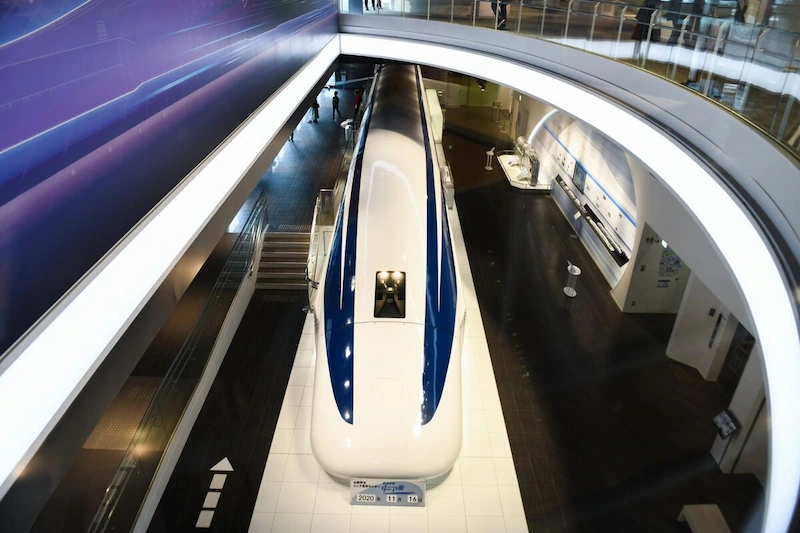


Central Japan Railway Co. has announced that it will not be able to meet its target of launching the world's fastest train service by 2027. The ambitious plan involved connecting Tokyo and Nagoya using cutting-edge magnetic-levitation technology. However, a major hindrance has been the delay in starting construction in Shizuoka, where a crucial tunnel was supposed to be built as part of the project.
Despite a construction contract being signed six years ago, the company has faced obstacles in Shizuoka, primarily due to opposition from the local government. Concerns have been raised about the potential impact on river water levels from the excavation of the tunnel, leading to significant delays in the project timeline. As a result, Central Japan Railway Co. has acknowledged that the 2027 target is no longer feasible.
The ¥9 trillion project, which aimed to revolutionize train travel in Japan, has been a flagship endeavor for the rail operator. The Chuo Shinkansen maglev line was expected to provide rapid transportation between Tokyo and Nagoya, significantly reducing travel time to just 40 minutes. The Japanese government had even provided a ¥3 trillion loan to support the project, highlighting its importance and potential benefits for the country's transportation infrastructure.
The setback in Shizuoka has directly impacted the timeline for the project, forcing Central Japan Railway Co. to reassess its launch date. While the company cannot provide a new opening date at this time, it remains committed to overcoming the challenges and ensuring the success of the maglev line. The original vision of extending the service to connect Tokyo and Osaka by 2037, with trains operating at speeds exceeding 500 kilometers per hour, may also face further delays due to the current situation.
Despite the setbacks and challenges, Central Japan Railway Co. is determined to push forward with the project and bring the world's fastest train service to fruition as soon as possible. The company's commitment to innovation and advancing transportation technology remains unwavering, and it will continue to work towards achieving its ambitious goals for the maglev line in the future.