


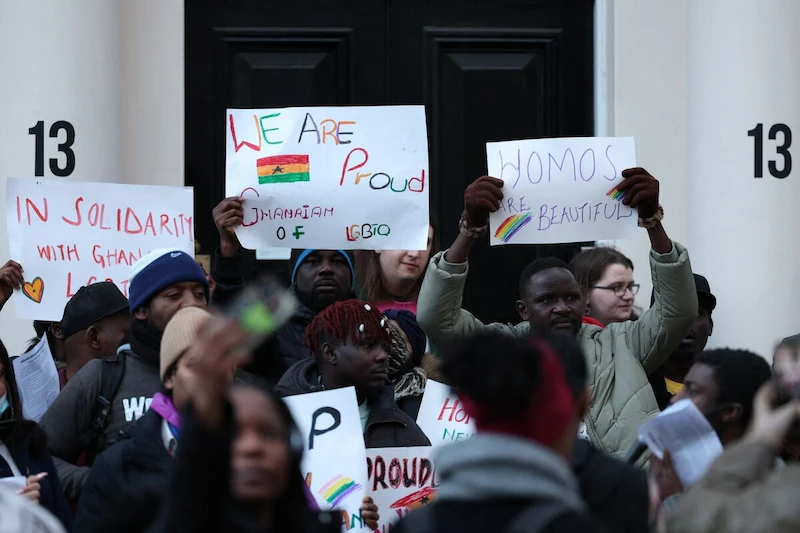


Ahead of Ghana's upcoming presidential elections, the nation's top contenders have made strong statements against homosexuality, refraining from explicitly stating their stance on a proposed anti-LGBTQ bill. The controversial Human Sexual Rights and Family Values Bill, which could potentially impose harsh penalties on LGBTQ individuals, has raised concerns both domestically and internationally.
Incumbent President Nana Akufo-Addo, who has just nine months left in office, has refrained from endorsing the bill until a legal challenge against it is resolved in the Supreme Court. Meanwhile, his vice president and favored successor, Mahamudu Bawumia, broke his silence on the issue, aligning his stance with his religious beliefs during a recent address at the Kumasi Central Mosque.
The potential ramifications of the bill, if enacted, are significant, as highlighted by Ghana's Finance Ministry. The country could risk losing access to billions of dollars in international funding, including support from the World Bank and the International Monetary Fund, which are crucial for Ghana's economic stability and debt restructuring efforts.
As the political discourse around LGBTQ rights intensifies in the lead-up to the elections, both Akufo-Addo and opposition leader John Mahama have made it clear that their personal beliefs align with traditional societal norms and religious values in Ghana. However, neither candidate has publicly stated whether they would sign the bill into law if elected.
The issue of LGBTQ rights has become a polarizing topic in Ghana, with recent opinion polls indicating that the bill's enactment could sway the voting decisions of a significant portion of the electorate. Despite this, surveys have shown that the economy, job creation, and education remain the top concerns for Ghanaian voters, highlighting the complex interplay between social issues and broader policy priorities in the upcoming elections.