


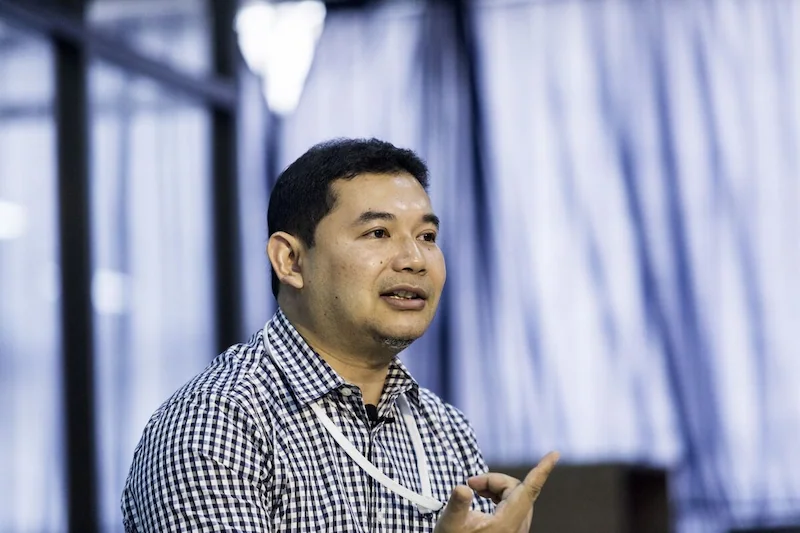


In a significant move to address its fiscal deficit, Malaysia is set to reduce petrol subsidies this year, announced the country's economy minister, Rafizi Ramli. The government is committed to redirecting its financial aid towards assisting those in need, as mentioned by Rafizi in an interview held in Putrajaya, the administrative capital. Emphasizing the necessity of managing the sequence of subsidy cuts, he noted the looming risk of inflation before the adjustments take effect.
Prime Minister Anwar Ibrahim's administration is confronted with the task of phasing out substantial subsidies and broadening the revenue base to enhance investor confidence, particularly as the Malaysian ringgit remains close to a 26-year low. Since assuming power in late 2022, Anwar has been grappling with a decline in approval ratings amid public concerns over escalating living expenses.
At present, Malaysia bears a substantial portion of the costs of fuel and cooking oil for its populace, straining the nation's finances. The government aims to reduce its budget deficit to 4.3% of the gross domestic product this year, down from 5% in 2023. The planned withdrawal of across-the-board subsidies for RON95 fuel, Malaysia's most commonly used and affordable gasoline, accounts for a significant portion of the 81 billion ringgit ($17 billion) spent on subsidies in the previous year.
To achieve the fiscal target of 4.3%, a specific timeline for subsidy reductions must be adhered to, Rafizi emphasized. Failure to do so could disrupt the financial calculations. Lenders have been growing impatient with the slow pace of promised reforms, reflected in the ringgit's 4% depreciation this year, nearing its weakest level since the 1998 Asian financial crisis.
Despite the currency's fluctuations, Rafizi remains optimistic about Malaysia's economic prospects and the government's objectives. He expressed confidence that the ringgit's performance has not deterred foreign investor interest or hindered the government's overarching plans. One key strategy in the economic restructuring is establishing Malaysia as a top global startup hub.
Rafizi outlined plans to cultivate a thriving ecosystem for startups and technology in Kuala Lumpur, aiming to attract global startups seeking funding and access to the Southeast Asian market. With efforts spearheaded by Khazanah Nasional Bhd., Malaysia's sovereign wealth fund, plans are underway to establish a "super fund" in collaboration with other sovereign funds to invest in startups, with the goal of drawing venture capital firms to the country.
As Malaysia strives to identify new sources of economic growth, current economic indicators point to challenges. Recent data suggests a downward trend in exports, with March likely marking a second consecutive month of decline. The initiative to bolster the digital and technology sector through investment in startups signifies the government's commitment to diversifying and revitalizing the economy in the face of external economic pressures.