


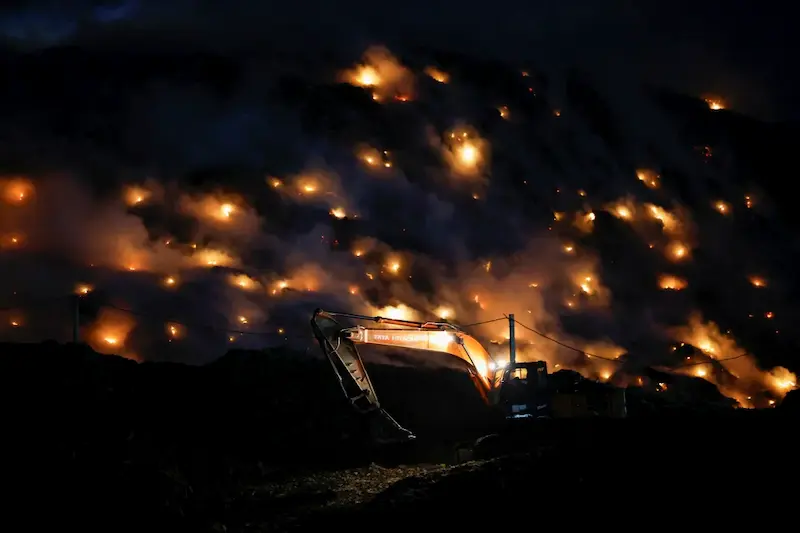


In the heart of India’s bustling capital, New Delhi, a looming trash mountain at the Ghazipur landfill continues to pose a grave threat to the city's residents. The recent outbreak of a fire at this towering landfill has exacerbated the already prevalent issue of toxic fumes blanketing the city in a thick and acrid haze. On Sunday, sections of the Ghazipur landfill were engulfed in flames, emitting dangerous heat and methane emissions that further contribute to India's climate challenges. The cause of the fire remains unknown, but landfill blazes are commonly ignited by combustible gases released from decomposing waste.
As temperatures soar during New Delhi’s scorching summers, the city’s landfills frequently erupt in flames, with rotting waste serving as a catalyst for methane gas emissions. Methane, the second most abundant greenhouse gas after carbon dioxide, exhibits a higher heat-trapping potential, intensifying the climate crisis. GHGSat reports that India produces more methane from landfill sites than any other country, attributing to the exacerbation of global warming.
Regrettably, the trash mountain at Ghazipur represents just one of approximately 3,000 overflowing landfills in India emitting hazardous gases and decaying waste. Standing at an astonishing 65 meters tall, the Ghazipur landfill is a monumental eyesore that not only dwarfs the nearby homes but also poses severe health risks to residents. Prolonged exposure to methane emissions can exacerbate respiratory issues, trigger asthma, and elevate the risk of stroke, indicating the urgency of addressing the landfill crisis.
Furthermore, the hazardous effects of landfills extend beyond methane emissions, as toxins have seeped into the ground over decades, contaminating water sources for thousands of individuals residing nearby. At Bhalswa, another prominent landfill in Delhi, reports of deep skin gashes and respiratory ailments have surfaced, highlighting the detrimental impact of landfill pollution on public health. Despite these alarming realities, authorities are grappling to tackle the escalating waste crisis, with more than 2,300 metric tons of solid waste being dumped at Ghazipur daily.
Efforts to manage the trash mountain include the deployment of drones for monitoring purposes and the exploration of methods to extract methane. However, the sheer volume of waste exceeding the landfill’s capacity since 2002 presents a formidable challenge. While recommendations such as formalizing the recycling sector and establishing compost plants have been proposed, effective waste management strategies remain elusive. Prime Minister Narendra Modi's "Clean India" initiative aims to transform garbage mountains into green spaces, offering potential relief to communities affected by landfill pollution.
Nevertheless, India’s reluctance to join the Global Methane Pledge, citing predominant methane emissions from farming activities, underscores the complexities of reducing greenhouse gas emissions. As India navigates its waste crisis and strives towards environmental sustainability, collective global action is imperative to mitigate the detrimental impacts of landfill pollution and combat climate change.