


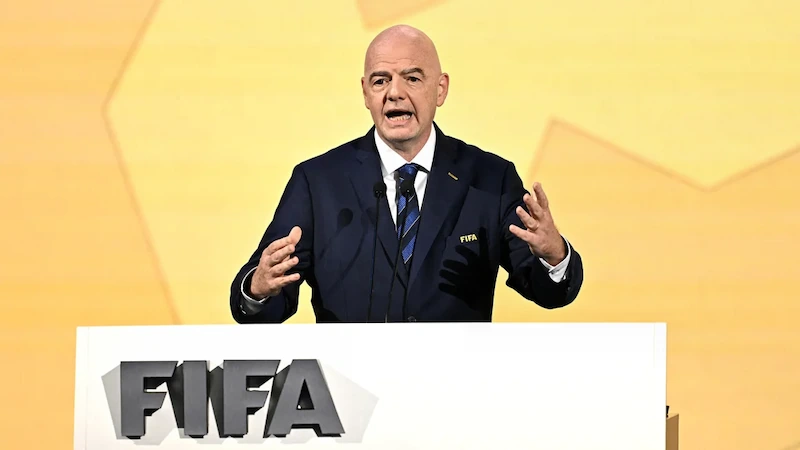


A legal battle is brewing between player unions and FIFA over the world governing body's decision to unilaterally expand the international match calendar, notably the impending 32-team FIFA Club World Cup. The English Professional Footballers’ Association (PFA) and the Union Nationale des Footballeurs Professionnels, supported by FIFPRO Europe, have taken issue with FIFA's actions, accusing the organization of disregarding player rights and potentially violating EU competition law.
FIFA's plan to host the upcoming Club World Cup in the United States in June-July next year has drawn criticism from the unions for infringing on players' right to an annual break, contravening the EU Charter of Fundamental Rights without sufficient justification. The unions are seeking legal recourse, calling on the Brussels Court of Commerce to refer the case to the European Court of Justice over concerns about forced labor, working conditions, collective bargaining rights, and competition restrictions.
PFA President Maheta Molango highlighted the importance of enforcing players' legal rights as employees, stressing the need for action within football to address issues of neglect towards player welfare and rights. Despite FIFA denying claims of inadequate stakeholder engagement, the unions maintain that player well-being is being compromised due to an overflowing football calendar, leading to increased injury risks and strain on players.
Amidst debates over the expansion of various club competitions, including the Champions League, Europa League, and Conference League, concerns about player workload have come to the forefront. Research by FIFPRO and Football Benchmark revealed staggering statistics, with young stars like Vinícius Júnior already surpassing the match minutes played by renowned players like Ronaldinho at a similar age, raising questions about the sustainability of the current football structure.
As football continues to evolve with expanded tournaments and increased demands on players, the clash between player unions and FIFA underscores the pressing need to prioritize player welfare and rights within the sport. The legal battle ahead may shape the future of football governance, shedding light on the delicate balance between commercial interests and the well-being of those central to the game – the players.