


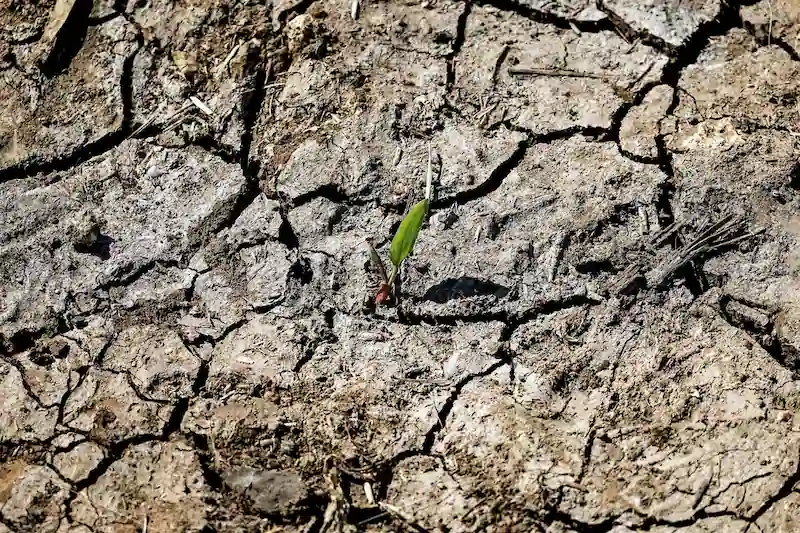


For nearly six decades, Mohamed Sadiri has tended to his 3-hectare farm in western Morocco with unwavering dedication. However, the arid conditions that have gripped the region have pushed him to the brink like never before. Last season, his wheat harvest yielded a mere 1 ton per hectare, the smallest output he has ever witnessed. The drought, the most severe in thirty years, has not spared his land either; his 25-foot well ran dry, leaving him with no option but to switch to barley, a more resilient alternative.
Sadiri is not alone in his plight. Alongside 1.2 million grain farmers in Morocco, he is bearing the harsh brunt of a changing climate marked by a fivefold increase in drought frequency in the country this century. The repercussions of this crisis will not be confined within Morocco's borders; record-low wheat production is anticipated at a time when global wheat exporters like France and Russia are grappling with their own crop challenges. Consequently, the availability of Moroccan fruits and vegetables in international markets, including Europe, the US, and other African nations, is expected to dwindle.
The current wheat harvest in Morocco is forecasted to fall short of 2.5 million tons, a far cry from what the national budget hinges on and the lowest output in the kingdom since the 2007 global food crisis. Imports are estimated to triple this figure, as production consistently lags behind purchases for the fifth time in six years. This protracted agricultural struggle poses a formidable challenge amid the nation's pressing demands – a hefty reconstruction bill post the recent earthquake, substantial investments in sports infrastructure for upcoming championships, and a looming threat reminiscent of the Arab Spring.
The perennial drought patterns have drastically curtailed Morocco's grain output from 10 million tons in wet years to a mere 3 million tons presently. Beyond grains, farmers cultivating tomatoes, bell peppers, strawberries, and olives are also confronted with adversities. El Guerdane, a prime farming area, has been parched since last November with dwindling water reserves across major dams in the country.
To curb inflation and stabilize markets, exports of onions and potatoes to West Africa have been restrained. The reduction in grain cultivation from 4 million hectares to 2.5 million this year reflects the harsh reality outlined by Agriculture Minister Mohamed Sadiki to lawmakers earlier this year. These successive droughts, characterized by heightened severity and frequency, demand comprehensive solutions that extend beyond immediate alleviation efforts.
The mounting agricultural crisis exacerbates existing socioeconomic disparities, where rural livelihoods are disproportionately impacted. A surge in national unemployment to 13% owing to a loss of 200,000 rural jobs underscores the urgent need for targeted interventions. The prevalence of subsistence farming on plots smaller than three hectares, underscores the dire conditions faced by the majority of farmers who lack essential resources and access to modern agricultural practices.
In response to these adversities, Morocco is undertaking adaptive strategies such as promoting conservation tillage across 1 million hectares by 2030, aiming to bolster yields while preserving soil fertility. Highlighting the urgency of equitable resource allocation, the Royal Institute for Strategic Studies emphasizes prioritizing support for small-scale farms crucial for ensuring national food security.
As Morocco's agricultural sector grapples with unprecedented challenges, the broader implications of the crisis are profound, echoing far beyond the fields and impacting the livelihoods of millions. Amidst the prevailing uncertainty and hardships, the resilience and resourcefulness of farmers like Mohamed Sadiri serve as a poignant reminder of the indomitable human spirit in the face of adversity and uncertainty.