


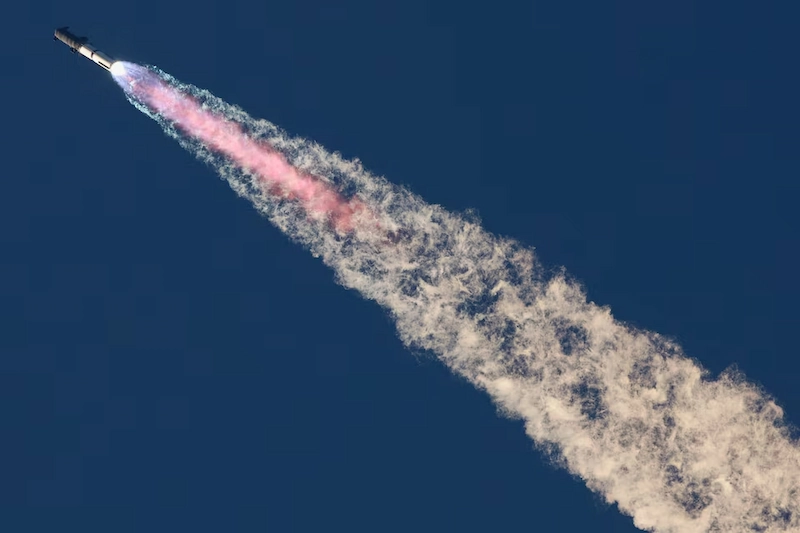


In a groundbreaking display of engineering prowess, SpaceX accomplished an extraordinary milestone during its fifth Starship test flight. The company successfully returned the rocket's colossal first stage booster, named "Super Heavy," back to its launch pad using massive mechanical arms for the very first time. This remarkable achievement further solidifies SpaceX's commitment to developing a fully reusable spacecraft for missions to the moon, Mars, and beyond.
The mission kicked off at 7:25 a.m. CT from SpaceX's launch facilities in Boca Chica, Texas. The Super Heavy booster propelled the Starship second stage rocket into space before separating at an altitude of approximately 70 km. The most daring segment of the test flight ensued as the booster began its descent back to Earth. The booster re-ignited three of its 33 Raptor engines to guide its return to SpaceX's launch site, where a futuristic tower stood tall, equipped with large mechanical arms at the top.
As the booster descended, the Super Heavy booster skillfully maneuvered into the waiting arms of the launch tower. The tower, towering over 400 feet tall, embraced the rocket with precision, securing it using tiny bars beneath its grid fins. Excitement filled the air as SpaceX engineers celebrated this novel catch-landing method, a testament to the company's innovative approach to rocket design and reusability.
While the booster made its triumphant return, the Starship second stage soared at approximately 17,000 miles per hour in space, ultimately aiming for a controlled splashdown in the Indian Ocean near western Australia. In a mesmerizing display, onboard cameras captured the ship reentering Earth's atmosphere, showcasing a dazzling pinkish-purple glow of superhot plasma enveloping its surfaces.
Thanks to the improved heat-shielding tiles, Starship reentered more gracefully this time, culminating in a successful simulated ocean landing. The rocket touched down in the waters off Australia's coast, leading to an explosive but celebratory conclusion. Musk exclaimed that the ship had landed "precisely on target," marking a significant achievement in SpaceX's pursuit of fully reusable space transportation.
Despite previous setbacks and explosions in testing, SpaceX's relentless dedication to innovation shines through in each mission. With this latest successful test flight, SpaceX continues to push boundaries in aerospace technology, laying the groundwork for future human exploration of the moon, Mars, and beyond.