


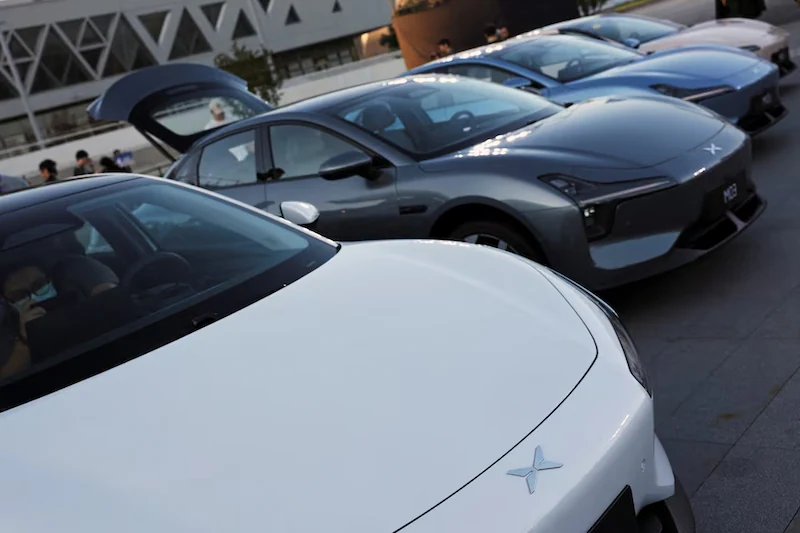


In a groundbreaking move towards cost-effective electric vehicle solutions, Xpeng has introduced its innovative "Kunpeng Super Electric System," designed to significantly extend the driving range of hybrid vehicles. Unveiled by Xpeng founder He Xiaopeng at a livestream event in Guangzhou, China, the system boasts the capability for a car to travel over 1,400 kilometers by utilizing an internal combustion engine to recharge the batteries once they are depleted.
He Xiaopeng highlighted the necessity for new power charging solutions tailored to the global market's diverse infrastructure conditions, emphasizing that the development of extended-range hybrids aligns with these varied needs. While the company did not specify a timeline for the release of new models featuring this technology, the introduction of the Kunpeng system represents Xpeng's strategic pivot towards hybrid solutions amid the push for profitability and sales expansion.
Following the footsteps of Li Auto, which has found success with extended-range electric vehicles (EREVs), several Chinese automakers are now embracing this technology as a cost-efficient alternative to pure EVs. Nio has also revealed plans to introduce an EREV exclusively for overseas markets, indicating a broader industry trend towards hybrid solutions. Moreover, battery giant CATL recently launched a specialized battery product aimed at supporting the growing demand for extended-range hybrids among automakers and consumers.
Moreover, Xpeng's technological showcase went beyond the extended-range hybrid system, featuring its self-developed AI chip, humanoid robot, and even a flying car. The company's commitment to innovation is further exemplified by its imminent release of an advanced assisted driving system, set to enhance autonomous driving capabilities like lane changing and parking.
By leveraging the benefits of extended-range hybrids, Xpeng and other automakers are not only aiming to mitigate the impact of tariffs but also cater to markets with inadequate EV infrastructure. In regions like Europe, where charging pole availability lags behind China, EREVs could serve as a practical solution for achieving widespread electric vehicle adoption. As the automotive industry continues to evolve, Xpeng's Kunpeng system signals a significant step towards a more accessible and sustainable future for electric mobility.