


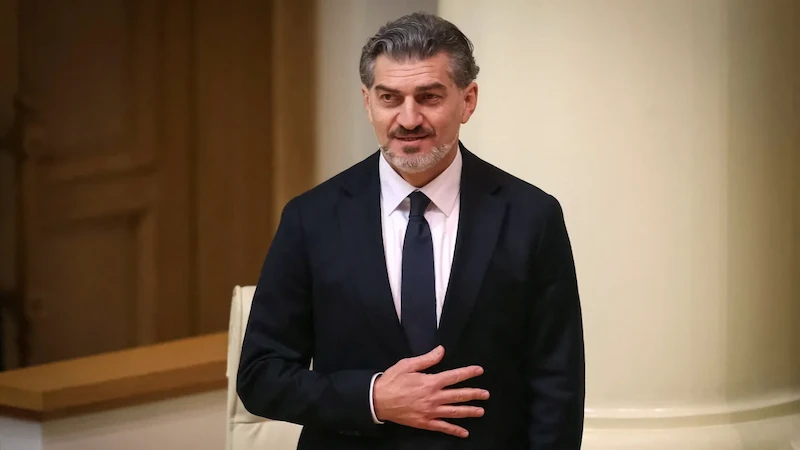


In a tumultuous political landscape, Georgian lawmakers have voted in the far-right former soccer star Mikheil Kavelashvili as the country’s next president. The decision, made in parliament by a direct ballot of a 300-member electoral college, has deepened tensions between pro-Russian government factions and pro-Western opposition groups. Kavelashvili, a former MP for the ruling Georgian Dream party and a one-time player for Manchester City, emerged as the sole candidate, as the main opposition parties have boycotted parliament since October’s disputed election.
Amid mounting popular anger over the government's abrupt halt of European Union accession talks, Kavelashvili’s selection is poised to exacerbate divisions within the country. Georgia, a nation with a history of pro-EU sentiment, is facing a shift towards authoritarian, pro-Russia policies under the ruling Georgian Dream party’s leadership. This move has effectively tempered hopes for Georgia's long-awaited path to EU membership.
The outgoing president, Salome Zourabichvili, a pro-Western figure who has aligned herself with the opposition protesters, denounced the election process, labeling it as a “mockery of democracy.” Despite the vote, Zourabichvili vowed to remain in office, asserting the legitimacy of her position as the country's only remaining institution.
Critics have raised concerns over Kavelashvili’s suitability for the role, citing his background in sports rather than politics. His appointment has been met with skepticism and criticism, viewed by many Georgians as an affront to the country. The selection of Kavelashvili, viewed as a puppet figure by some, sends a signal contrary to Western values and further strains Georgia's relationship with the EU.
Georgia’s political turmoil stems from the disputed election in October, with Georgian Dream claiming victory amid allegations of irregularities. The European Parliament has called for a rerun of the election, indicating the deepening rift between the government and the EU. Furthermore, the government's decision to suspend EU accession talks, despite substantial public support for joining the EU, has exacerbated tensions and led to widespread protests.
Amid the ongoing demonstrations in Tbilisi, protesters continue to gather outside the parliament building, defying police crackdowns and displaying resilience against government actions. The escalation of violence, with reports of police brutality and clashes, has raised concerns about civil liberties and democratic norms in Georgia.
As the country navigates through a period of uncertainty and unrest, the upcoming presidency of Mikheil Kavelashvili is likely to intensify political divisions and fuel resistance from pro-EU factions. The future trajectory of Georgia's political landscape remains uncertain, with implications for its relations with the EU and the broader international community.