


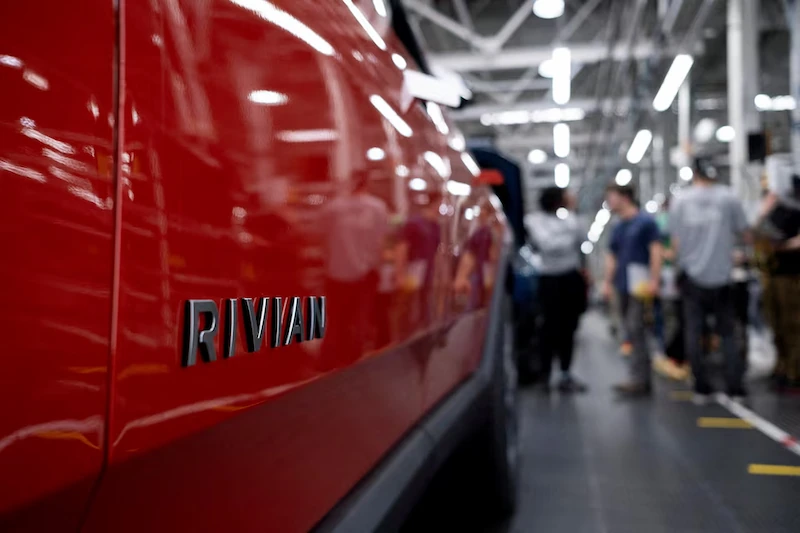


Rivian, the electric vehicle manufacturer, defied expectations by surpassing fourth-quarter delivery projections and announcing that its production is no longer hindered by component shortages. This development signals positive momentum for the company as it aims to achieve profitability in the near future.
Shares of Rivian, based in California, surged by almost 19% following the announcement. This surge comes after the company experienced a decline of over 40% in its stock value in 2024. Notably, Rivian had faced challenges with a shortage of a crucial component used in its R1 SUV, R1T pickups, and delivery vans, which had constrained its production capabilities since the third quarter of last year. The shortage had led Rivian to revise down its annual production forecasts in October.
In a statement released on Friday, Rivian declared that the previously problematic component shortage was no longer impeding its production. The company successfully delivered 14,183 vehicles in the fourth quarter of 2024, surpassing analysts' estimates of 13,472. This uptick represented a notable 42% increase from the previous quarter and marked Rivian's highest delivery figures in over a year. Even with Amazon, its major investor, reducing fourth-quarter deliveries to focus on holiday season sales, Rivian still achieved impressive results.
Production figures for the quarter also exceeded expectations, with Rivian manufacturing 12,727 vehicles compared to estimates of 11,398 units. In 2024, Rivian's total production reached 49,476 vehicles, slightly lower than the prior year but above the company's revised target range of 47,000 to 49,000 units.
Analysts highlight Rivian's improved production capabilities and streamlined product strategy as key strengths that position the company competitively, especially as rival Tesla recently reported a decline in yearly deliveries due to an aging product lineup. Rivian's recent cost-cutting measures, including renegotiating supplier contracts and enhancing manufacturing processes, enabled the company to achieve a gross profit in the fourth quarter. Rivian also finalized a significant $5.8 billion investment from Volkswagen as part of a technology collaboration between the two automakers.
Despite challenges in the EV market such as slowing demand and increased competition from traditional automakers, Rivian remains optimistic about its prospects. The company is scheduled to release its fourth-quarter financial results on February 20 after the market closes, providing further insight into its performance and future trajectory.