


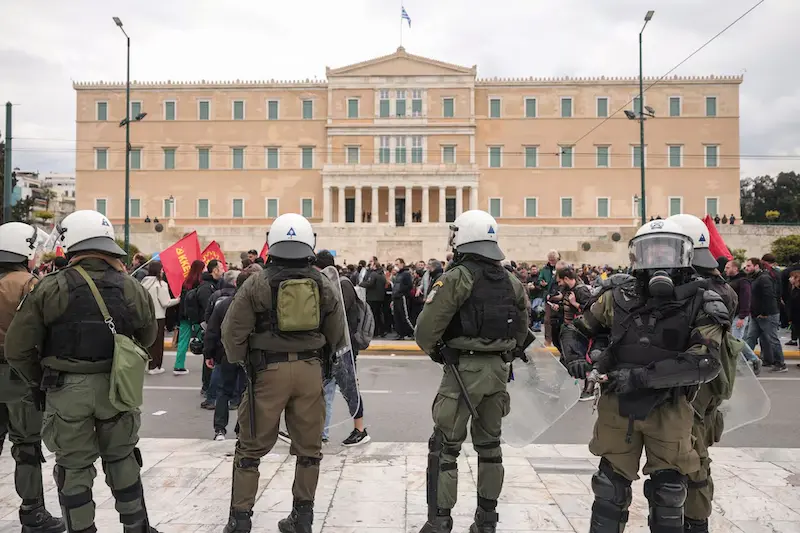


In a show of solidarity, thousands of Greek citizens gathered in Athens to demand increased wages in order to cope with the escalating cost of living. The one-day strike saw ferries at ports, flights grounded, and trains halted, as air traffic controllers, seafarers, train workers, municipal employees, and public transportation workers all walked out.
Greece, having navigated its way out of a debilitating debt crisis, is now facing the challenge of addressing the impacts of austerity measures that were imposed during the bailout years. Despite the government's efforts to raise the minimum wage by 35% since 2019, many households still find it difficult to make ends meet amidst surging expenses for essential needs like food, housing, and utilities.
Labor unions are advocating for substantial pay increases and stronger collective labor agreements, pointing out that Greek workers have seen a 10% decrease in purchasing power compared to 2019 due to inflation. Data from Eurostat revealed that Greece's minimum salary, in terms of purchasing power, lags behind other European Union countries.
Although the government aims to gradually increase the minimum wage to 950 euros by 2027 and raise the average monthly gross salary to 1,500 euros, workers are feeling the strain of rapidly rising costs. Public sector employees, who faced cuts in bonuses and working conditions in recent years, have also joined the protests to demand fair compensation.
Finance Minister Kyriakos Pierrakakis acknowledged the concerns of Greek workers, emphasizing the importance of reducing taxes while also recognizing the necessity of addressing the wage disparities and inflation challenges faced by the workforce. As the nation strives for economic stability, the ongoing debate between fiscal prudence and providing adequate support for workers continues to unfold on the streets of Athens.