


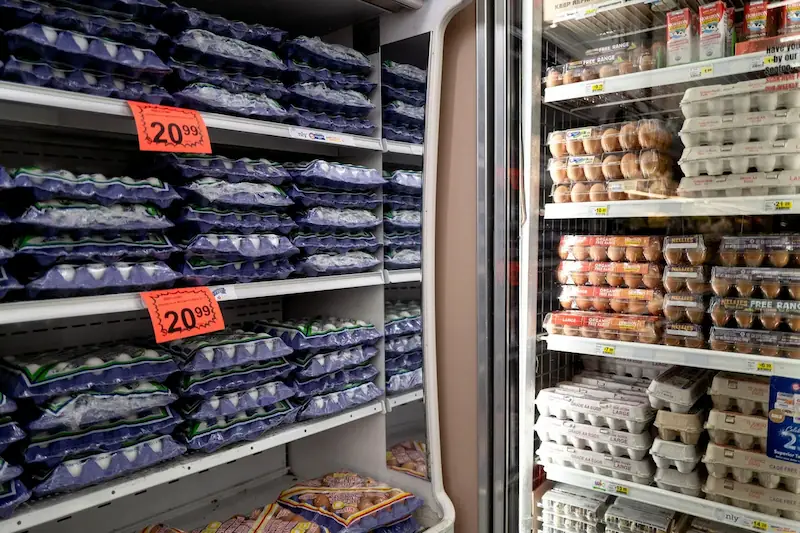


As inflation in the US showed signs of calming down last month, egg prices stubbornly remained at record highs, posing a persistent challenge for consumers. The latest report from the US Bureau of Labor Statistics revealed that in March, the average price for a dozen eggs surged to $6.227, compared to just half that amount a year earlier. This spike in prices comes despite a notable decrease in what grocery stores pay to their suppliers.
The soaring cost of eggs continues to be a thorn in the side for President Donald Trump, who has attributed the issue to his predecessor's policies while working to address the situation by boosting imports. Although there has been a recent decline in wholesale egg prices, the underlying cause—severe bird flu outbreaks across the country—remains unabated. With the Easter holiday approaching and raising demand, the prospect of relief appears distant. Adding to the complexity are tariffs that may further exacerbate import costs.
Emily Metz, president of the American Egg Board, indicated that a complete recovery might take the industry up to a year, provided no new outbreaks occur. While some industry experts anticipated a drop in retail egg prices due to decreased demand and a temporary lull in bird flu cases, the reduction in wholesale prices has been slow to trickle down to consumers.
Concerns over the high prices have sparked investigations by the US Department of Justice into potential price manipulation by producers, as well as discussions about industry concentration contributing to inflated costs. Cal-Maine Foods Inc., a leading egg supplier, disclosed a probe by the Justice Department into the reasons behind the price surge.
With Easter festivities around the corner and demand for eggs soaring, consumer expenses are likely to rise. The Trump administration's efforts to combat bird flu and reduce prices include plans to import millions of eggs from European countries, albeit potentially subject to tariffs. Although these imports may not significantly alleviate shortages due to logistical challenges, additional measures like biosecurity programs and research funding could offer long-term protection against future outbreaks.
The specter of bird flu poses an ongoing threat to poultry farms, with millions of birds already perishing this year. The complexity of this wave of outbreaks, involving a wider range of species and transmission methods, highlights the unpredictability of the situation. While efforts are underway to contain the disease, the possibility of further mutations and outbreaks looms, underscoring the delicate balance between containment and potential escalation in the poultry industry.