




Asylum-seekers in Ireland are facing danger from far-right extremists as they flee violence and persecution in their home countries. Tensions have been rising in the country over the growing number of refugees and migrants, highlighted by a recent arson attack on a makeshift camp near Dublin's International Protection Office.
Ahmed, a Sudanese refugee, was camping in the tent when it was burned down by anti-immigration activists. He had fled Sudan after facing political persecution for his pro-democracy beliefs. Despite seeking asylum in Ireland, he has been waiting for months without any permanent accommodation. He described his situation, "It is hard to be under a tent, there [is nowhere] to go to the bathroom and no cooking facilities. This is not a solution. We just want to be somewhere safe."
Ireland, known as "the land of a hundred thousand welcomes," has struggled to cope with the high number of refugees arriving on its shores. It has one of the longest backlogs of asylum claims in Europe, and refugees have been waiting an average of 23 months to hear an initial decision on their application. A former asylum-seeker and spokesperson for the Movement of Asylum Seekers in Ireland (MASI), Bulelani Mfaco, pointed out that the backlog is because, unlike other EU countries, Ireland has no statutory time limits for issuing decisions on asylum claims.
The housing crisis in Ireland has made matters more complicated. There is a long-term shortage of housing, and rents are increasing, making home prices unaffordable for many. Despite this, the government has pledged to continue accepting asylum-seekers in line with its participation in the European Union's relocation and resettlement schemes.
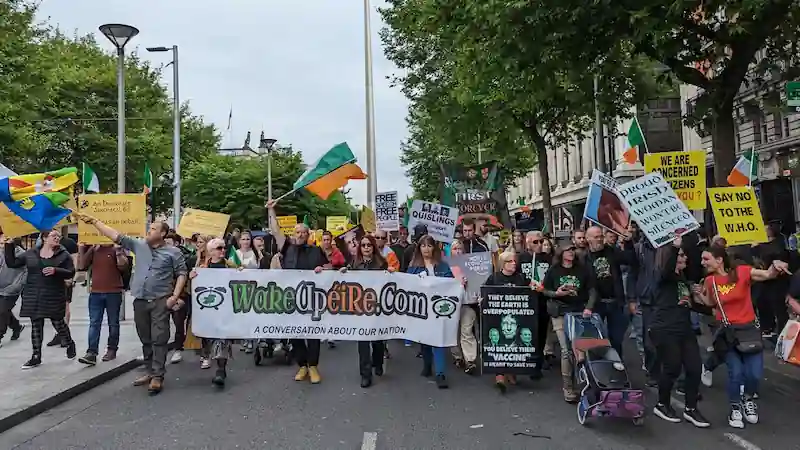
Anti-immigration activists are exploiting concerns over the housing crisis to spread disinformation about asylum-seekers. Police have reported 127 "anti-immigration" and "anti-housing of refugees" protests across the city this year. Many years of ineffective government policy have deepened Ireland's housing crisis, making it increasingly difficult to find accommodation for refugees. The crisis has been weaponized by a loud minority, and it's vital to distinguish between those with legitimate concerns about resource provision and those spreading hatred.
While Ireland has mainly escaped the rise of the far-right political movements experienced elsewhere in Europe over the past decade, there have been isolated attacks on asylum-seekers. The government has condemned such attacks, but it is struggling to find a solution to the crisis.
The government has pledged to end its controversial "Direct Provision" system, which places asylum-seekers in emergency accommodation while they wait for their applications to be processed. However, the housing crisis has caused a delay in the abolition of the camps, many of which have been criticized by human rights groups. There are also concerns about standards in some of Ireland's largest refugee accommodation centers, such as the Citywest Transit Hub.
The government has said that almost 85,000 people are currently accommodated in Ireland, including almost 20,000 asylum-seekers who are in state-provided accommodation. However, as of May 19, almost half of all asylum-seekers who arrived in March had not been offered accommodation. Additionally, more than 5,000 people are living in accommodation centers who have already received immigration status but cannot move out due to the lack of affordable housing.
The situation is dire for asylum-seekers in Ireland, and there is an urgent need for action to protect them from harm and provide them with adequate accommodation.