


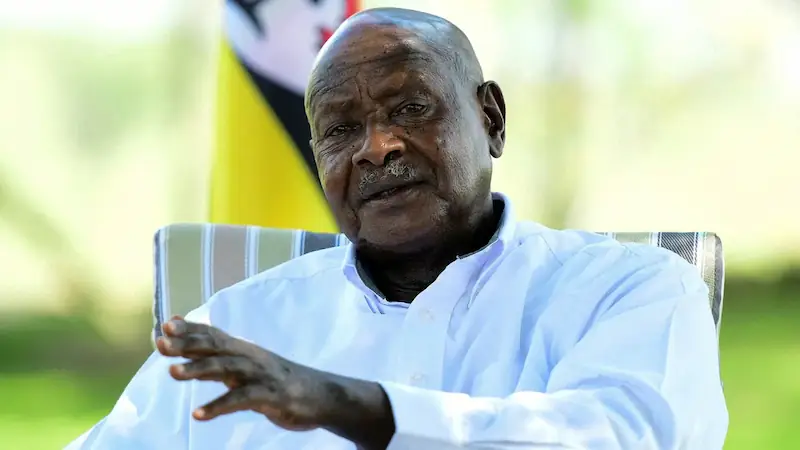


Uganda's President Yoweri Museveni recently signed one of the harshest anti-LGBTQ laws in the world, defying international pressure. The legislation includes the death penalty for "aggravated homosexuality," which includes sexual activity with a minor, having sex while HIV positive, and incest.
In addition, the bill outlaws sex education for the gay community and makes it illegal not to report what it calls "aggravated homosexuality" to the police. It also calls for "rehabilitation" through widely discredited conversion therapy for gay offenders.
The bill was sent back to parliament for revisions earlier this year by Museveni but passed in the latest version, which the speaker of parliament, Anita Annet Among, celebrated as answering the cries of the Ugandan people. She thanked her colleagues in parliament for withstanding pressure and bullies.
However, opposition to the law has been strong, with Western governments such as the US condemning it and rights activists warning that it will open the door to violence and discrimination against LGBTQ Ugandans. Civil society groups have already announced plans to challenge the legislation in court.
Henry Mukiibi, an activist who assists LGBTQ Ugandans, fears that the law will lead to vigilante justice, torture, and death. "We are going to be tortured. I am just scared now about what is next. People have been waiting for the bill to be signed to work on us. We are going to die," he said.
Nicholas Opiyo, a prominent human rights lawyer, said that the Ugandan civil society and LGBTQI community would take the case to court because the law is discriminatory and repressive, and goes against international human rights and local standards. He called on Uganda's development partners to hold its government accountable.
Overall, the new legislation represents a significant setback for LGBTQ rights and equality in Uganda, a country that has previously seen similar homophobic laws struck down by the courts. The battle lines are now drawn, and the next stage of the struggle will take place in the courts.