


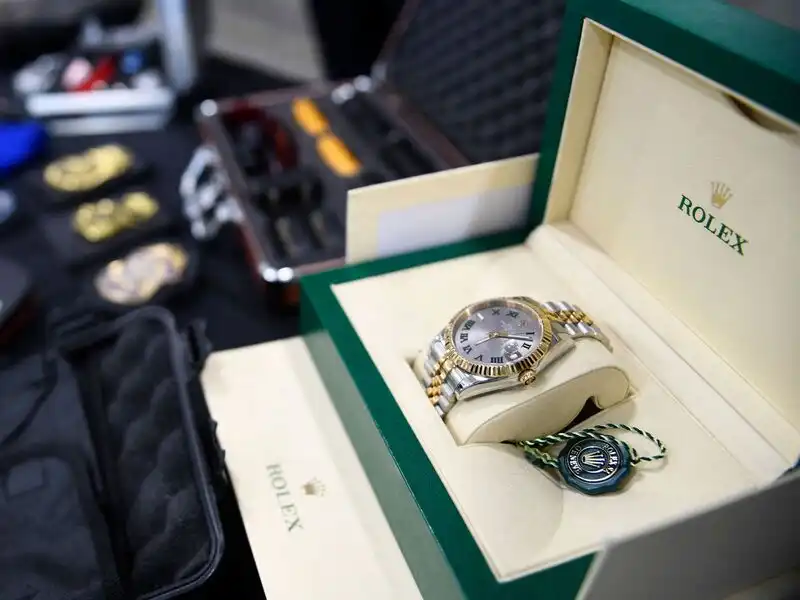


The number of sophisticated fake watches being discovered in the pre-owned market is on the rise, with Rolex replicas accounting for about half of these knockoffs, according to Watchfinder & Co, a renowned pre-owned watch dealer. Last year alone, as many as 10% of the watches received from sellers were determined to be fakes during the authentication process, highlighting the growing prevalence of counterfeit luxury timepieces.
Arjen van de Vall, the CEO of Watchfinder, stated in an interview with Bloomberg Radio that Rolex is the most coveted luxury watch brand and consequently the most replicated. This high demand for Rolex watches has made them a prime target for counterfeiters. With their popularity and aspirational status, it is no surprise that Rolex replicas make up a significant portion of the fake watches flooding the market.
However, the situation is becoming increasingly challenging as counterfeit watches are becoming more sophisticated and harder to spot. Watchfinder used to be able to identify around 80% of counterfeit timepieces through visual inspection alone, but now that number has dropped to just 20%. As a result, their employees now require more detailed inspections, including opening watch casebacks and checking movements, in order to identify the high-end knockoffs.
The issue of fake or replica luxury watches has become a significant problem in the secondary watch market, which is valued at approximately €25 billion ($27.3 billion) per year. Some counterfeit versions are so well-made that they can even fool knowledgeable experts. Omega, a brand owned by Swatch Group AG, recently faced a criminal plot involving former employees selling a "Frankenstein" Omega Speedmaster. This watch, created by combining authentic parts from other vintage watches, sold for over $3 million at auction, making it the most expensive Omega timepiece ever sold. Omega has stated that it was the victim of a criminal conspiracy.
Rolex has taken steps to combat the issue by launching a certified pre-owned program last year, which authenticates used watches sold through authorized dealers. However, it is not just Rolex that is being counterfeited or altered. Van de Vall mentions that replica or clone watches of high quality can be found for almost all major luxury brands in the market.
The rising trend of fraudulent watches comes after a period of soaring prices for the most desirable models during the pandemic. However, these prices have since experienced a significant decline. The Bloomberg Subdial Watch Index, which tracks prices for the top 50 most traded luxury watch models by value, including Rolex, Patek Philippe, and Audemars Piguet, indicates an 18% drop in secondary market prices over the past year. This decline in prices, albeit volatile, is seen as a positive development by van de Vall, as it signifies a departure of speculative buyers and a return to market stability.
In conclusion, the prevalence of counterfeit watches, particularly Rolex replicas, has become a pressing issue in the pre-owned watch market. Watchfinder's CEO highlights the increasing sophistication of these fake timepieces, which now require more detailed inspections to identify. As the industry grapples with the challenge of fraudulent watches, the hope is for more stringent measures and continued market stability in the future.