


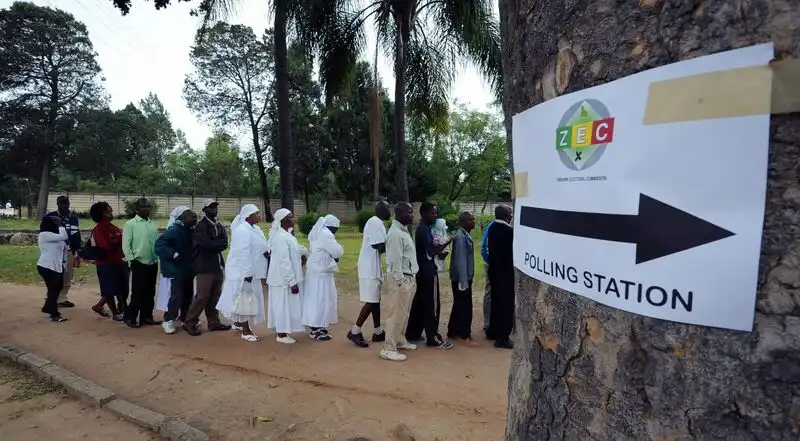


Almost half of the Zimbabweans surveyed in a recent poll are skeptical that the outcome of the upcoming election will accurately reflect the votes cast by citizens. The survey, conducted by Afrobarometer, a pan-African survey company, highlights the persisting concerns over allegations of intimidation and irregularities in previous elections. This finding only adds to the fears that the trend of disputed elections in Zimbabwe will continue.
The potential consequences of another disputed vote are worrisome for Zimbabwe. Already burdened with economic and political turmoil, the country has been isolated on the international stage since its failed land reform program over two decades ago. With many of its ruling politicians facing sanctions from the US, UK, and the European Union, and the nation locked out of international debt markets, Zimbabwe desperately needs a legitimate and credible election to begin rebuilding its reputation.
The ruling party, the Zimbabwe African National Union-Patriotic Front (ZANU-PF), has been in power since the country's independence in 1980 and seeks to extend its rule. However, the current state of the economy, with skyrocketing inflation and a virtually worthless national currency, has left voters concerned about unemployment and the government's ability to manage the economy. In fact, Afrobarometer's survey revealed that 85% of those polled believed that the government's management of the economy has been very poor. Despite this sentiment, it is unlikely that significant change will occur.
According to the survey, a greater number of Zimbabweans believe that the election results will be manipulated rather than reflect the true will of the people. Additionally, a notable proportion of respondents either declined to answer the question or expressed uncertainty on the issue. This lack of faith in the electoral process raises concerns about the credibility and legitimacy of the upcoming elections.
The fragmentation of the opposition further strengthens ZANU-PF's chances of success in both the presidential and parliamentary votes, with the Citizens Coalition for Change (CCC), the largest opposition group, projected to receive 27% of the vote in both contests. However, more than a quarter of respondents chose not to disclose their preferences.
Despite the skepticism surrounding the election, it is encouraging to note that 85% of eligible Zimbabweans have registered to vote. This demonstrates a desire for political participation and a willingness to engage in the democratic process.
President Emmerson Mnangagwa, who assumed power after the ousting of longtime ruler Robert Mugabe in 2017, will face off against nine other presidential hopefuls on August 23rd. His main challenger is Nelson Chamisa from the Citizens Coalition for Change. However, the recent High Court ruling nullifying the candidacy of former cabinet minister Saviour Kasukuwere, who fled the country following Mugabe's removal, adds another twist to an already complex political landscape.
The survey, conducted between April 29th and May 13th, encompassed the opinions of 2,400 Zimbabweans with a margin of error of 2%. As the election approaches, it is crucial for Zimbabwe to address the concerns raised by its citizens and strive for a credible and transparent process in order to rebuild trust and pave the way for a more stable and prosperous future.