


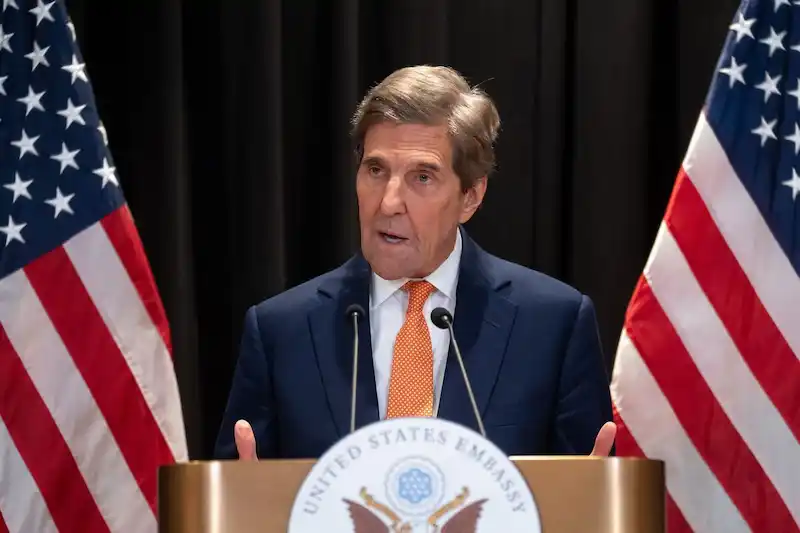


The recent talks between US climate envoy John Kerry and his Chinese counterpart Xie Zhenhua ended without any major new commitments, but both sides remain optimistic about the progress made in combatting global warming. Kerry mentioned that they simply ran out of time to delve deeper into the discussions but emphasized that they are committed to working together to achieve significant action. They have agreed to continue intensive talks in the upcoming weeks, focusing on integrating renewable energy sources to reduce coal usage and addressing methane and other greenhouse gas emissions.
The absence of a grand declaration during these talks is a setback for global climate negotiations, as the success of such efforts often depends on cooperation between the world's top two greenhouse gas emitters - the US and China. However, both countries remain committed to their climate goals. While China has asserted that its approach to carbon reduction will be determined by itself and not influenced by external factors, it has reaffirmed its commitment to peak emissions by the end of the decade and achieve net-zero by 2060.
The collaboration between the US and China has been vital in reaching global climate pacts, including the Paris Agreement in 2015. It is important for both countries to send a collective signal before the upcoming UN climate summit in Dubai. The discussions between President Joe Biden and President Xi Jinping at the Asia-Pacific Economic Cooperation leaders' summit in November could provide an opportunity for further dialogue.
Despite the limited progress, the fact that the discussions will continue is significant, given the turbulent state of US-China relations. However, time is running out as there are only four months until the UN climate summit. Urgency is critical, especially as scientists highlight the increasing risk of extreme weather events with rising global temperatures.
During the talks, China agreed with the US that efforts should be made to limit global warming to no more than 1.5 degrees Celsius above pre-industrial levels. They also acknowledged the need to accelerate the reduction of coal usage. China's support for the findings of the UN's Intergovernmental Panel on Climate Change, which stressed the difficulty of achieving the 1.5-degree goal, marks a notable shift.
One contentious issue in the discussions has been China's construction of more coal-fired power plants. While China has invested heavily in renewable energy, the continuous construction of coal plants offsets some of the progress. Kerry emphasized the importance of addressing this issue and appealed to China's self-interest by highlighting the extreme heatwaves affecting various regions worldwide.
In recent weeks, Kerry is the third high-ranking US official to visit Beijing as the Biden administration seeks to restore dialogue between the two countries amidst strained relations on various fronts.