


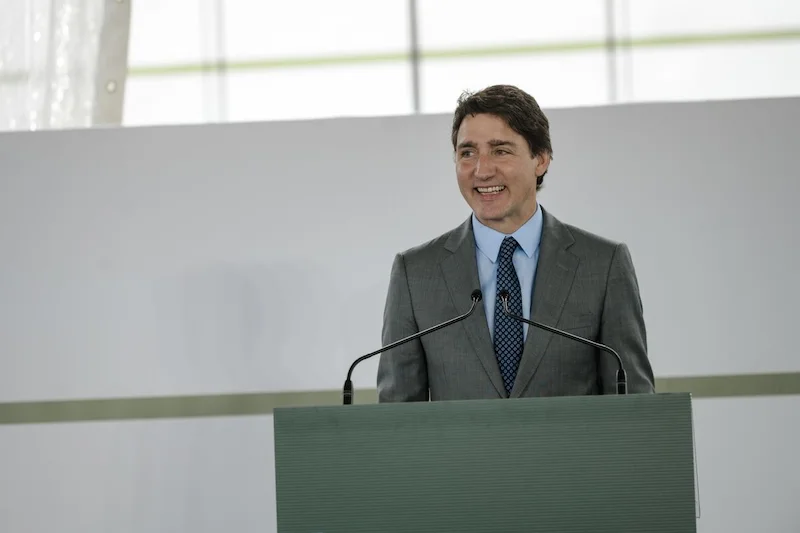


Prime Minister Justin Trudeau is convening with his new cabinet to address the growing concern over the escalating cost of living in Canada. The issue of affordability, particularly housing, was a central focus of Trudeau's cabinet reshuffle last month. The three-day retreat in Prince Edward Island will provide an opportunity for the newly appointed ministers to brainstorm potential solutions and develop a cohesive messaging strategy.
As the pressure mounts, a recent poll by Nanos Research for Bloomberg News reveals that three in ten Canadians blame government spending as the primary factor driving up consumer prices. Another 22% point fingers at businesses for raising their prices, while 10% attribute it to the actions of the Bank of Canada. Pollster Nik Nanos describes it as an "inflationary spiral" from a perspective of the average person. Government spending leads to inflation, which in turn prompts the central bank to raise interest rates, compelling businesses to increase prices to cover their rising costs.
While the overall inflation rate stood at 3.3% in July, the cost of food soared by 7.8%. Moreover, the Bank of Canada's aggressive interest rate hikes resulted in a staggering 30.6% surge in mortgage interest costs. The demand for homes has been amplified by record immigration levels, further exacerbating the housing supply shortage and driving up the benchmark home price to a soaring C$754,800.
Meanwhile, federal spending continues to exceed pre-pandemic levels, with the government projecting a deficit of C$40.1 billion for this year. Bill Morneau, Trudeau's former finance minister, recently attributed part of the blame for inflated prices to the government's extension of Covid-19 financial relief programs into late 2021.
Under these mounting concerns, Trudeau's government is beginning to adopt a message of fiscal restraint. Treasury Board President Anita Anand has set an October deadline for all cabinet members to identify areas where spending can be reduced by C$14.1 billion by 2028, along with an additional C$4.1 billion in subsequent years.
Finance Minister Chrystia Freeland emphasized the necessity of these savings to maintain a fiscally responsible position, allowing the government to implement important programs such as temporary tax rebates and clean-energy tax credits for businesses. These promised cuts were first outlined in Freeland's March budget.
The cabinet retreat presents a challenging task for ministers. They must navigate the competing priorities of ensuring affordability for Canadians while exhibiting fiscal restraint. Marci Surkes, an adviser at the Ottawa-based consultancy Compass Rose Group, predicts that Freeland will deliver a tough message regarding restraint and prudence at the retreat. Nevertheless, the government must also demonstrate that they have a comprehensive plan to address the rising cost of living.
During the retreat, ministers will actively explore ways to support Canadians in coping with immediate challenges while keeping their long-term vision in mind. Industry Minister Francois-Philippe Champagne highlighted recent investments by automakers, such as Volkswagen AG, Stellantis NV, and Ford Motor Co., which have received government subsidies. Champagne emphasized that the government was elected to make a difference and serve Canadians, and this commitment remains unchanged.
The Nanos poll reveals that the government's messaging thus far has not been effective. The percentage of Canadians blaming federal spending for the cost of living has risen from 26% in July 2022 to 30%. Blame placed on the central bank and businesses has also increased, while the number of people attributing the rising prices to pandemic-related supply chain issues has decreased from 31% to 17%.
It is clear that the Trudeau government faces a significant challenge in managing public expectations and addressing the mounting concerns regarding the cost of living. The retreat presents a critical opportunity for the new cabinet to devise effective strategies and messaging that will restore public confidence and address this pressing issue.