


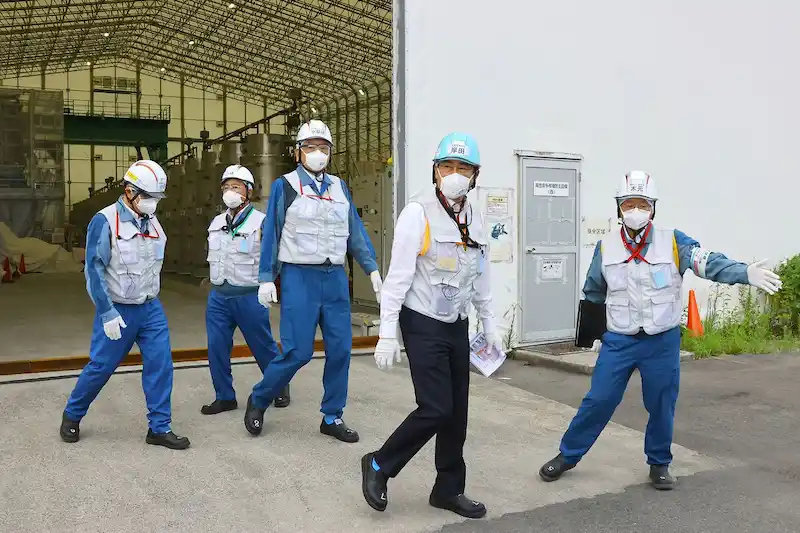


Japan is set to proceed with its controversial plan to release treated wastewater from the Fukushima nuclear disaster site into the Pacific Ocean as early as August 24, according to NHK. The exact date is expected to be confirmed during a cabinet meeting chaired by Prime Minister Fumio Kishida. Japan's decision has sparked international debate, with China and other countries expressing concerns over the safety of the proposal.
The plan involves gradually discharging the treated wastewater over a period of at least 30 years. The volume of water to be released is equivalent to about 500 Olympic-size swimming pools. However, critics argue that the treatment system used by Tokyo Electric Power Co. (Tepco), the operator of the Fukushima Dai-Ichi facility, may not be effective enough. China has also highlighted the unique circumstances of the Fukushima disaster, as it involved a meltdown in 2011.
The fishing industry in Japan is particularly worried about the potential impact on seafood sales. Local fishing groups fear that the release of wastewater could harm marine life and taint their catches. In addition, there has been a viral campaign targeting cosmetics brands, raising awareness about the issue. Hong Kong has even threatened to impose new import restrictions due to concerns about food safety.
To address the growing volume of contaminated water, Tepco has been storing it in around 1,000 tanks at the Fukushima site. However, these tanks are expected to reach their capacity by next year. This has prompted the need for a long-term solution, leading to the decision to release the treated wastewater.
The International Atomic Energy Agency (IAEA) has conducted a two-year review of Japan's discharge plan and has found that it complies with global standards. IAEA Director General Rafael Grossi has assured that the release would have a minimal radiological impact on both the environment and people. He also stated that the agency would closely monitor the releases and work to address concerns from neighboring nations.
As Japan prepares to move forward with its controversial plan, the global community remains divided on the issue. While some argue that the release is necessary for the long-term cleanup of the Fukushima site, others continue to question the safety and potential consequences of such action. The situation is complex and delicate, requiring careful consideration of the environmental and economic implications.