


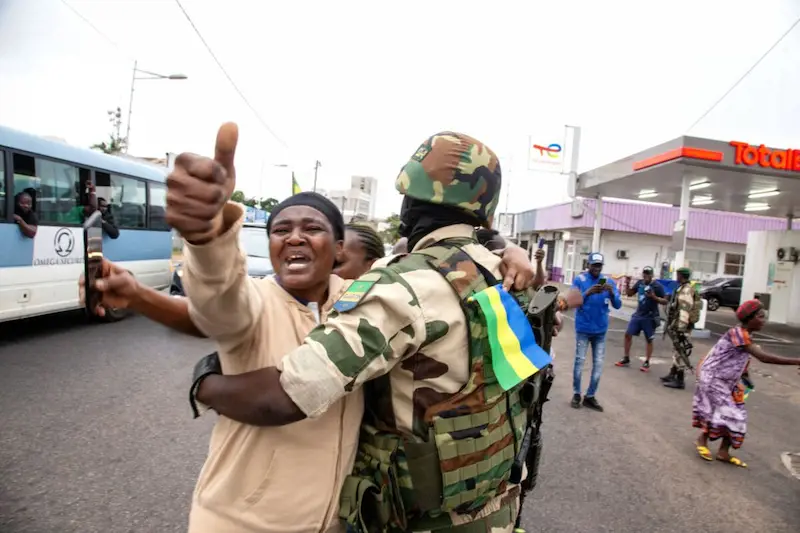


Gabon's military takeover, which resulted in the removal of President Ali Bongo, has sparked concerns both regionally and internationally. General Brice Nguema, who has been appointed as the transitional head, justified the coup by citing Bongo's ill health and a flawed election that secured him another term. However, the European Union (EU) has cautioned against using force to restore civilian rule, emphasizing that military coups are not the solution. The coup in Gabon is the ninth in sub-Saharan Africa over the past three years, adding to worries of political instability in the region.
The EU's foreign policy chief, Joseph Borrell, acknowledged the irregularities in Gabon's recent elections but made it clear that rigging elections was also an illegitimate way of gaining power. He urged for a peaceful resolution to the crisis and emphasized the need for respecting constitutional processes. The EU does not support military interventions to reverse the coup.
General Brice Nguema, a cousin of the deposed president, has been chosen to lead the transitional government. Nguema, who is the head of Gabon's Republican Guard, previously served as an aide-de-camp to former President Omar Bongo. It is worth noting that Nguema owns properties in the United States, raising concerns about potential corruption and illicit activities.
Following the coup, President Bongo has been placed under house arrest along with his family and medical doctor. One of his sons has also been detained. Bongo has called on his supporters to raise awareness about the ongoing events in Gabon. The military takeover has caused a slump in the nation's dollar bonds and raised worries about the economic and political stability of the country.
Gabon is an oil-rich nation and a member of OPEC, producing about 200,000 barrels per day. However, despite its natural resources, a significant portion of the population lives below the poverty line. The political turmoil and uncertainty due to the coup further exacerbate concerns about the country's economic future.
The Gabonese Eurobonds have experienced a significant decline since the coup, with negative returns in emerging markets. Bondholders now face the immediate risk of potential economic sanctions. Additionally, international companies with operations in Gabon, such as French mining group Eramet SA, oil and gas producer Maurel & Prom SA, and TotalEnergies SE, have faced stock losses following the coup.
The military coup in Gabon raises concerns about the potential contagion effect of coups in Africa and puts pressure on regional organizations to restore civilian rule. The African Union (AU) and the Economic Community of West African States (ECOWAS) have faced criticism for their inaction in preventing and reversing coups in recent years. The AU, which suspended Niger following its coup, has condemned the actions in Gabon but has not presented a specific plan of action.
It is crucial for regional and international bodies to address the issue of coups in Africa in a decisive and coordinated manner. The consequences of political instability in the continent can have far-reaching effects on the economy, security, and well-being of African nations. Additionally, a comprehensive approach is needed to address not only the immediate crisis in Gabon but also the underlying causes that contribute to political unrest across the region.