


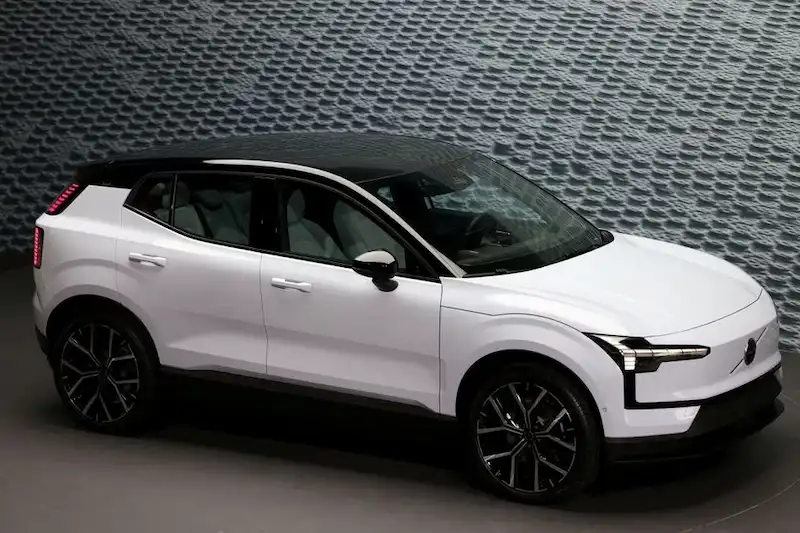


Volvo Cars, a Swedish automaker majority owned by China's Geely, announced its plans to phase out the production of diesel cars by early 2024. This move is part of Volvo's larger strategy to transform into an all-electric car manufacturer by 2030. By taking this step, Volvo will become one of the first legacy car makers to completely abandon diesel-powered vehicles.
As recently as 2019, a majority of the cars sold by Volvo in Europe were diesel models. However, the demand for diesel vehicles has significantly declined in recent years. In 2022, diesel cars accounted for only 8.9% of Volvo's sales. In contrast, fully-electric and hybrid models constituted 33% of Volvo's sales in August. While the company did not specify the breakdown of combustion-engine models, it is evident that Volvo's focus is shifting towards electric and hybrid technologies.
The decline of diesel sales in Europe can be attributed to various factors, including the Volkswagen emission-cheating scandal. Since this exposé, carmakers have been gradually reducing the number of diesel models available in their lineups. In 2015, diesel vehicles comprised more than 50% of Europe's new car sales. However, their market share has dropped to just over 14% as of July.
With Volvo's commitment to phasing out diesel cars and fully embracing electric mobility, the company is making a significant stride towards sustainability. By prioritizing electric and hybrid options, Volvo aims to reduce greenhouse gas emissions and contribute to a more environmentally friendly transportation sector.
This decision by Volvo could serve as a catalyst for other car manufacturers to follow suit and accelerate the shift towards electric vehicles. As the automotive industry undergoes a transformative phase, Volvo's bold move signifies its determination to lead the charge in the sustainable mobility revolution.