


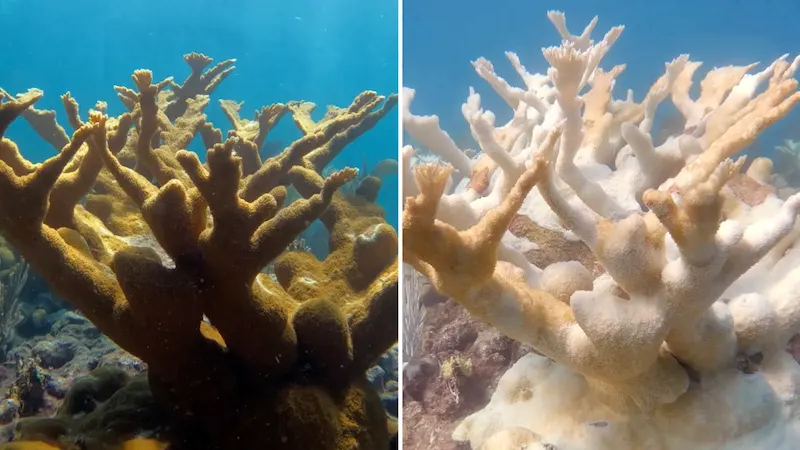


This summer, Florida's coral reefs experienced a devastating blow as a record-breaking marine heat wave hit the region. Now, scientists fear that this event may have been the final blow for the iconic species of coral known as elkhorn coral. Already on the edge of local extinction, elkhorn coral populations have been "decimated" by the extreme ocean heat, according to coral expert Liv Williamson from the University of Miami. The heat wave has taken a severe toll, wiping out the majority of the remaining corals that conservationists were hoping to use for genetic rescue plans.
Elkhorn and staghorn coral are essential building blocks of marine life in the Caribbean region. These branching corals grow rapidly, creating a rainforest-like canopy that provides vital protection for fish and other organisms, supporting the entire ecosystem. While elkhorn and staghorn corals are slightly more heat-tolerant than other coral species, they are highly susceptible to bleaching. Bleaching occurs when corals expel their algal food source in response to stress, causing them to turn white.
Unfortunately, this year's heat wave affected both wild elkhorn corals and genetically modified corals bred to be more heat-tolerant. Coral conservationists had been using these varieties to restore the populations devastated by disease. However, the ocean temperatures off Florida and the Caribbean rose up to 3 degrees Celsius above normal, exceeding the heat tolerance of even the bred corals. Mass bleaching and subsequent die-offs were observed as a result.
Marine heat waves, like the one witnessed this summer, have become more frequent and extreme due to human-caused climate change. Liv Williamson warns that we are not adequately prepared for the rapidly escalating impacts. Back in the 1960s and 70s, elkhorn and staghorn corals were abundant, but they have become so rare that simply encountering a live specimen on the reef brings tears to the eyes of coral experts. A 2020 study already indicated that the elkhorn coral population in the upper Florida Keys was "functionally extinct" and unlikely to contribute effectively to the ecosystem.
The loss of elkhorn coral has significant implications for restoration efforts in Florida. Even sites starting to show some coral density necessary for ecological impact would be dramatically affected by any further deaths. Staghorn coral, while faring slightly better than elkhorn, also faces similar challenges in the long term.
However, amid this grim situation, there are glimmers of hope. Recent surveys reveal shockingly fast signs of recovery at certain reefs, indicating resilience within the ecosystem. Researchers are cautiously optimistic, hoping to maximize these signs of recovery and use the knowledge gained from this event to better prepare for the next heat wave. While many scientists and conservationists are struggling emotionally with the loss and the seemingly insurmountable task of saving these vital species, the ongoing rescue efforts are essential. Moving corals to cooler nurseries, deeper waters, and creating a "living gene bank" on land hold promise for future restoration.
The fate of Florida's coral reefs lies in the hands of these dedicated scientists, who refuse to give up. Although the challenges are immense, there are still tools and interventions available to prevent extinction. The road to recovery may be long and arduous, but the determination to save these valuable ecosystems remains unwavering. The hope is that with continued efforts and innovative strategies, Florida's coral reefs can rebound and thrive once again.