


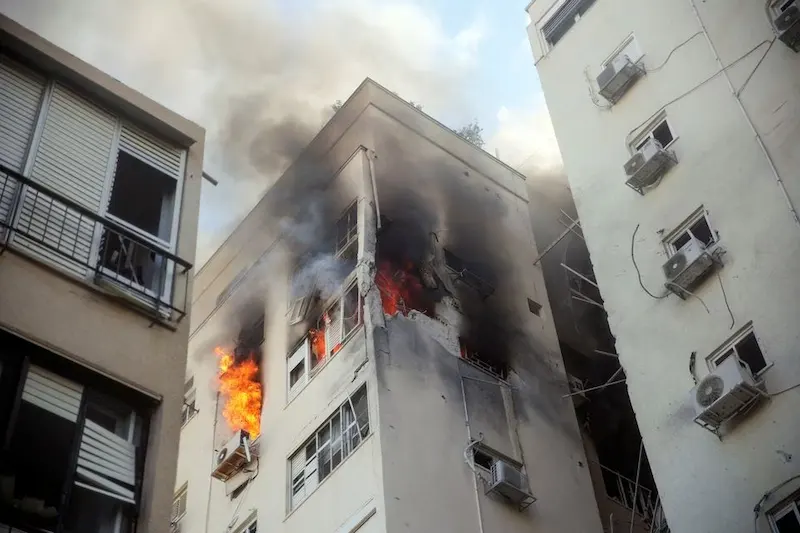


Israeli stock and bond prices took a sharp dive on Sunday, following a deadly attack by Hamas gunmen from Gaza, which claimed the lives of hundreds of Israelis and left many others abducted. The key Tel Aviv share indices, including TA125 and TA35, plummeted nearly 7%, with banking shares experiencing a particularly steep 9% decline. Turnover reached 2.2 billion shekels ($573 million), while government bond prices also fell by as much as 3%. This sudden market reaction comes as Israel grapples with the aftermath of one of the bloodiest attacks it has seen in decades.
The timing of this attack coincides with the Israeli shekel already being at its weakest level this year due to a controversial government plan aimed at overhauling the judiciary. As a result, experts predict further depreciation of the shekel in the coming days, potentially prompting the Bank of Israel to intervene by selling foreign currency reserves. The situation is further compounded by the anticipation that this wave of violence and its consequences will have a more protracted and severe impact on the Israeli economy and its fiscal budget than previous conflicts.
Hamas gunmen wreaked havoc in Israeli towns on Saturday, causing significant damage and loss of life. In response, Israel retaliated with air strikes on Hamas targets in Gaza. The violence escalated as Gaza militants fired thousands of rockets into Israel, including some reaching as far as Tel Aviv, prompting airlines to suspend flights to and from Israel. Delta Air Lines and United Airlines have already cancelled their flights to and from Israel, while Air India announced that its Tel Aviv flights will be suspended until mid-October.
Finance Minister Bezalel Smotrich has directed ministry department heads to swiftly allocate budgets necessary to manage the ongoing conflict. The Bank of Israel, however, cautioned that it is still too early to fully assess the economic damage resulting from the violence. Referring to a 50-day war with Hamas in 2014, which caused damage equivalent to 0.3% of the country's GDP, the central bank highlighted uncertainties regarding economic projections. Previously, the bank projected 3% growth for 2023 and 2024.
The disruptions caused by the conflict extend beyond the financial markets. Major events have been cancelled or disrupted, including Nvidia's AI summit, which was scheduled to take place in Tel Aviv next week. Additionally, schools have been closed, many companies have granted their employees time off, and most stores, except supermarkets and pharmacies, have shut down.
Despite the challenging circumstances, Israel's Manufacturers' Association assured the public that factories are still operating to mitigate concerns about scarcity of essential products. The association's president, Ron Tomer, emphasized that all companies will continue operating as much as possible, even under emergency conditions, to ensure that residents do not face shortages. Intel Corp, Israel's largest employer and exporter, declined to comment on whether chip production has been affected.
With the situation remaining uncertain, the Israeli economy is bracing for further challenges, both in the short and long term. As the country navigates through this period of heightened unrest, the impacts on various sectors, including finance, transportation, and manufacturing, will need to be closely monitored in the coming days and weeks.