


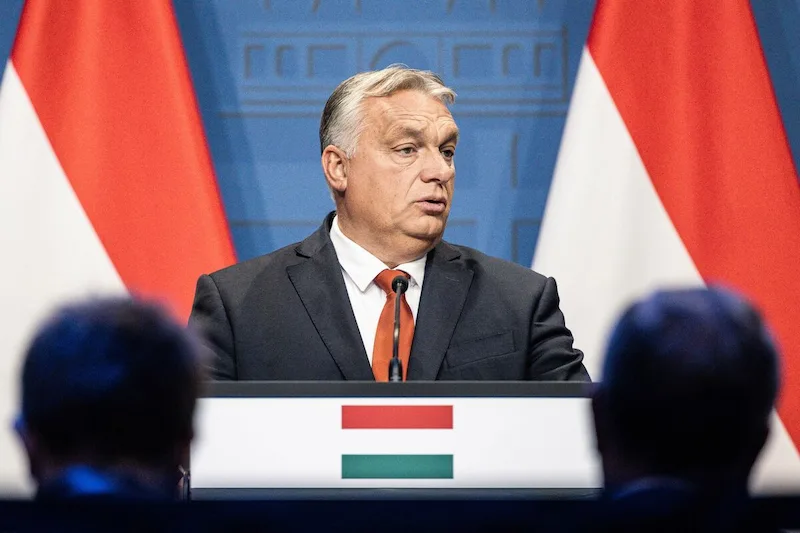


The surprising election victory of the pro-European Union opposition in Poland not only upset Poland's nationalist leadership but also left Hungarian Prime Minister Viktor Orban's self-proclaimed illiberal democracy more isolated than ever in the European Union (EU). The fate of billions of euros in aid from Brussels now hangs in the balance as Hungary and Poland have been challenging the EU's values for years. While Orban has been the ideological leader, Poland's Law & Justice party has provided weight to the populist push and veto powers that often gave Orban air cover.
Now, with the return of former European Council President Donald Tusk as Polish premier, the Hungarian-Polish alliance is poised for a U-turn. Tusk, who is deeply suspicious of Orban and his government's ties to Russia, has pledged to bring Poland back into the EU political mainstream, thereby ending eight years of nationalist rule. It is expected that Tusk will put distance between Poland and Hungary, which will leave Orban without a steadfast ally that had consistently shielded Hungary with the threat of a veto in the EU's Article 7 rule-of-law procedure.
The changing of the guard in Warsaw will have significant consequences for Hungary in the EU. The Article 7 rule-of-law procedure, which can lead to the suspension of a member state's voting rights in the bloc, has been a constant concern for Hungary and Poland. However, with Poland under the leadership of Tusk, Hungary will no longer have the unconditional support and protection it enjoyed before. The return of Orban ally Robert Fico in Slovakia, although a positive development for Orban, does not guarantee Hungary's alignment with its northern neighbor in the EU, according to Deputy Foreign Minister Levente Magyar.
One of the most critical issues at stake is the release of tens of billions of euros in funding that the EU has suspended for Hungary and Poland due to concerns over the erosion of the rule of law. While Poland's new government is expected to pass legislation quickly to unlock its funding, Hungary may face a tougher predicament. The EU Commission is preparing to make a decision on Hungary's funding in the coming weeks, and the outcome of Poland's election is likely to influence that decision. Orban, in a recent interview, expressed the concern that with a left-wing government in Poland, Hungary might be left alone and find it easier for the EU to deal with them.
As a result of these developments, Orban faces a setback and finds himself more isolated within the EU. The alliance between Hungary and Poland, which has been instrumental in challenging the EU's values, is now strained and potentially heading towards dissolution. Orban's illiberal democracy is losing its support base, and the future of Hungary's EU funding remains uncertain. The upcoming decisions and actions taken by Poland and the EU Commission will determine whether Orban can regain some leverage and avoid further isolation within the bloc.