


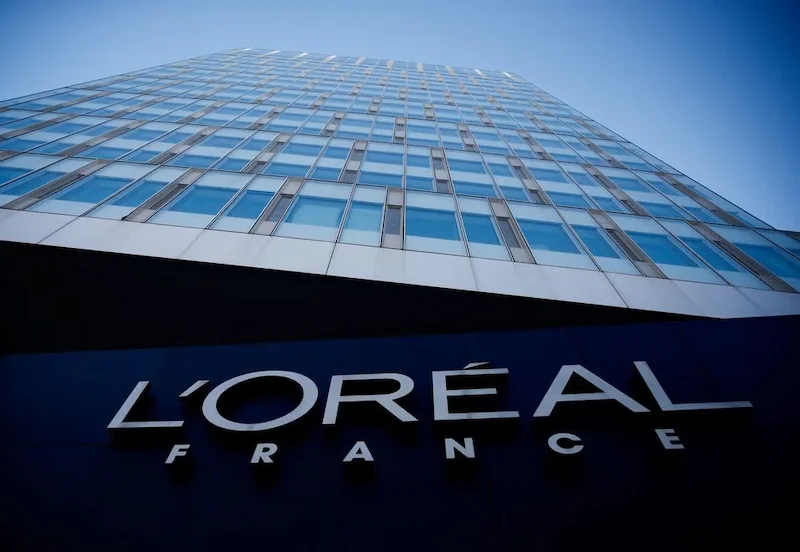


L'Oreal, the French cosmetics giant, reported strong sales growth for the third quarter of this year. While the company's sales rose by 11.1%, the figures fell slightly below market expectations. The growth was primarily driven by robust performances in Europe and the United States, but fell short of a strong rebound in China.
L'Oreal's sales figures in North Asia, which predominantly come from mainland China, saw a decline of 4.8%, greatly missing the projected 14.4% rise. The company attributed this underperformance to changes in China's policy regarding personal shoppers known as daigou, which affected its travel retail business. Despite these setbacks, L'Oreal managed to gain market share in mainland China, where it experienced a 7.7% sales growth over the first nine months of the year.
China has become a crucial focus for L'Oreal and other investors due to its sizeable beauty market. Although the country's post-pandemic recovery has been challenged by factors like high youth unemployment and a property crisis, L'Oreal has been steadily gaining market share. The company's luxury division is currently the market leader in high-end cosmetics, with a portfolio that includes internationally renowned brands like Yves Saint Laurent, Valentino, and Prada.
L'Oreal's performance in Europe and North America surpassed expectations, with sales increasing by 16.2% and 11.8%, respectively, during the third quarter. In North America, this growth represents an acceleration compared to previous quarters. However, L'Oreal's luxury division experienced a slowdown in growth, with sales increasing by 3.2%. This suggests that consumers are curbing their expenditures on high-end cosmetics, aligning with a broader trend observed in the luxury sector.
Analysts have noted signs of downtrading within L'Oreal's luxury division and believe that current like-for-like estimates may be too optimistic. These observations align with recent reports of a slowdown in perfumes and cosmetics sales from luxury leader LVMH. Despite these challenges, L'Oreal remains a dominant player in the global beauty market, offering a wide range of products under various brands, including popular labels like Maybelline and Lancome.
In conclusion, while L'Oreal's overall sales grew significantly in the third quarter, falling short of expectations in China highlights the challenges faced by the company in that market. However, L'Oreal's strong performance in Europe and North America demonstrates its ability to adapt and thrive in different regional markets. With its diverse portfolio of brands and continuous market share gains, L'Oreal remains a frontrunner in the cosmetics industry.