




As electric vehicles (EVs) continue to gain popularity, buyers in 2024 will have even more factors to consider when making a purchase decision. In addition to comparing price, range, and charging speed, it will be important to determine whether the car is capable of powering your home during emergencies. Luckily, a growing number of EV models hitting the market are equipped with bidirectional charging capabilities, allowing them to tap into their battery storage and provide backup power to households. This functionality not only benefits individual EV owners but also offers a promising solution for utilities struggling to balance renewable energy production and power disruptions caused by climate change.
According to a study by the Smart Electric Power Alliance (SEPA), the 2.1 million EVs currently on US roads have an estimated battery storage of 126 gigawatt-hours, which is five times the amount of battery storage connected to the grid. This surplus of battery storage can be leveraged by utilities by aggregating the EV batteries into virtual power plants. By doing so, utilities can avoid relying on fossil fuel power stations during peak demand periods and instead harness the energy stored in EVs.
The need for backup power and resilience is particularly evident in states like California, which experiences frequent blackouts due to wildfires and heatwaves. With a quarter of new car sales in California being electric and EVs accounting for over 40% of sales in certain Bay Area regions, the potential for using EVs to power homes during blackouts becomes even more significant.
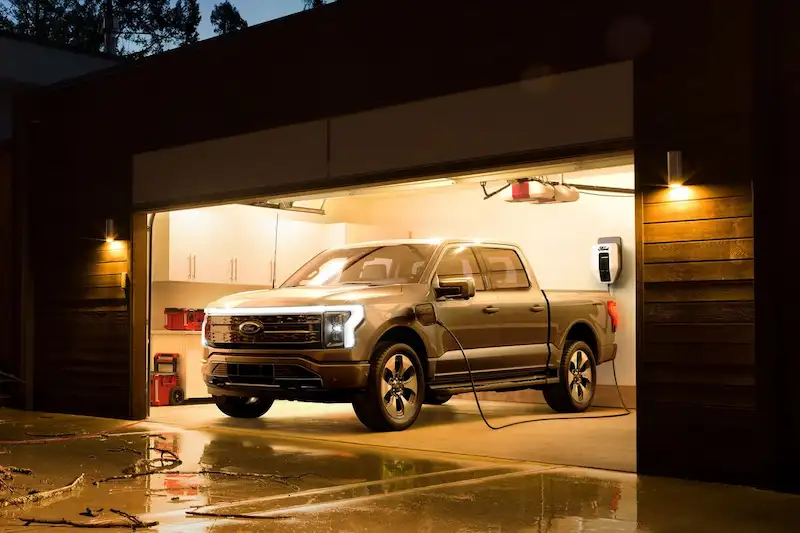
Several automakers have already embraced bidirectional charging capabilities in their EV models. For example, Ford's electric F-150 Lightning pickup truck comes with a 131-kilowatt-hour battery pack that can supply power to a dwelling for several days when connected to a bidirectional charger and a home power-management system. Other brands like Hyundai, Kia, General Motors, Nissan, and Rivian also offer bidirectional battery capabilities in their EV models.
Despite being a dominant player in the EV market, Tesla has been slower to adopt bidirectional charging. However, during Tesla's Investor Day event in March, executive Drew Baglino expressed expectations that Tesla's cars would eventually become bidirectional-enabled. While Elon Musk, Tesla's CEO, had some reservations about the practicality of bidirectional charging for residential use, he recognized the future potential of EVs as supplemental energy sources.
Enabling bidirectional charging in your EV is just the first step towards transforming it into a mobile power plant. There are different types of bidirectional charging, each offering unique benefits and costs. Vehicle-to-Load (V2L) allows EV owners to plug appliances and devices directly into the vehicle's outlets, making it useful for activities like camping or providing power during home blackouts. Vehicle-to-Home (V2H) involves connecting the car to a home's electrical system, allowing it to automatically supply backup power during grid outages and intelligently manage energy flows with the help of bidirectional chargers, hardware, and software.
While V2L typically requires minimal additional equipment, V2H integration currently comes at a premium. For example, installing a bidirectional charger and a home integration system for the Ford F-150 Lightning costs around $11,000, compared to $2,000 for a conventional charger installation. However, automakers like Kia and GM are actively working to develop more affordable bidirectional charging solutions for future models.
In addition to V2L and V2H, there is also Vehicle-to-Everything (V2X) charging, which explores how EVs can contribute to the overall power grid. Utility companies such as Pacific Gas & Electric Co. in California have initiated pilot projects to investigate the potential of integrating EVs into the grid. These projects evaluate the utility of EVs in powering homes and functioning as backup energy sources. By gathering data on the capabilities of using EV batteries as a virtual power plant, utilities can reduce the need for additional infrastructure and costly gas "peaker" plants that are only activated during peak demand periods.
With the expected increase in EV adoption in the coming years, electricity demand is projected to double. The surplus battery capacity in EVs represents an opportunity to minimize the need for new infrastructure and decarbonize the grid at a lower cost. Experts estimate that the EV batteries in PG&E's service territory alone are sufficient to power the city of Oakland for three days, and this capacity could potentially grow to meet 25 days of power demand by 2030.
As EV technology continues to advance and bidirectional charging becomes more prevalent, EV owners can contribute to a more resilient and sustainable energy future. Transforming an EV into a portable power source not only provides backup power during emergencies but also allows for more efficient utilization of renewable energy and grid stability.
In conclusion, if you're considering purchasing an electric car in 2024, it's worthwhile to explore models that offer bidirectional charging capabilities. This feature not only benefits individual EV owners by providing backup power during emergencies and enabling the use of EVs as a supplemental energy source at home but also presents opportunities for utilities to optimize renewable energy integration and manage grid stability more efficiently. Transforming EVs into rolling power plants has the potential to play a vital role in creating a more resilient and sustainable energy future.