


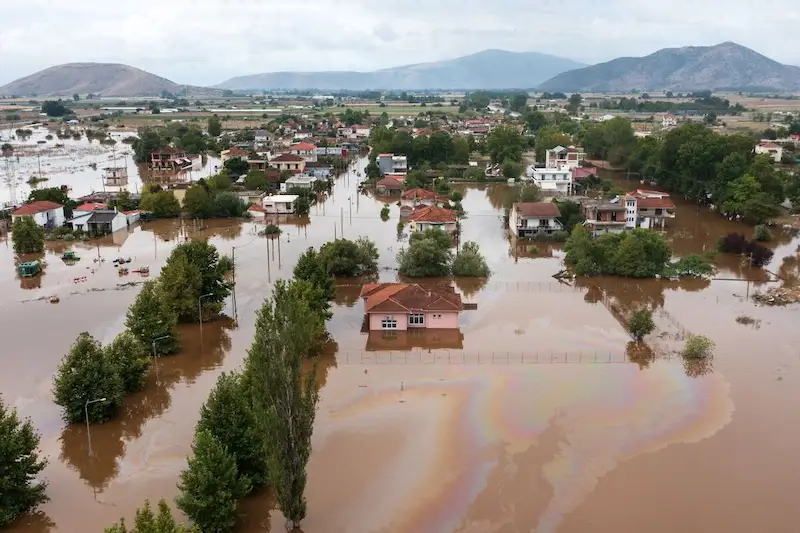


Researchers have discovered that megafloods, the most severe flood events on record, can be predicted by analyzing past flooding in similar regions on the same continent. This breakthrough finding, published in Nature Geoscience, could revolutionize flood preparedness and save lives. Megafloods are not uncommon, with Europe alone experiencing 510 such floods between 1999 and 2021. Often catching towns and cities off guard, these catastrophic events can result in significant loss of life and billions of dollars in damages. By studying historical flood data and hydroclimates, the study found that 95.5% of observed megafloods fell within the predicted peak flood boundaries of similar regions.
The study emphasizes the critical role of cross-border communication and data sharing between countries in preparing for and forecasting flooding. However, due to regulations, sharing national data and research across borders is a rarity in Europe. This study highlights how important it is to overcome these barriers and establish collaborative efforts to prevent and mitigate the impact of megafloods. Lead author Miriam Bertola, a hydrological researcher at the Technical University of Vienna, stresses the need for sharing data and knowledge with neighboring countries.
With the planet experiencing increasing temperatures and the subsequent effects of climate change, the ability to anticipate and prepare for flooding becomes crucial. Warmer temperatures lead to greater evaporation from bodies of water, resulting in heavy precipitation. This can lead to more frequent and intense river floods in certain areas. Europe, influenced by the moistening atmospheric conditions of the northern Atlantic, falls under the westerlies, prevailing winds blowing from west to east. Consequently, the continent is prone to an increase in both the number and intensity of floods and megafloods.
However, the study also acknowledges the limitations of relying solely on historical data. As the climate evolves, it becomes crucial to consider future climate forecasts for a more accurate prediction of megaflood scenarios. Fred Hattermann, vice head of the research department of climate resilience at the Potsdam Institute for Climate Impact Research, suggests incorporating future climate projections into forecasting tools to enhance preparedness efforts.
Despite these limitations, the study's forecasting methodology holds promise for effectively preparing communities for megafloods. By providing advance warning, lives and critical infrastructure can be saved. Implementing a warning system based on this methodology could enable officials in different regions to estimate worst-case scenarios and take appropriate measures. It becomes possible for countries like Poland, Slovakia, and Scandinavia to anticipate the possible occurrence of megafloods in their respective areas.
In conclusion, the study's groundbreaking findings showcase the potential of using historical flood data and hydroclimates to predict megafloods in similar regions on a continent. By fostering international collaboration and data sharing, countries can enhance their flood preparedness and response capacities. However, to address the challenges posed by a changing climate, the incorporation of future climate projections into forecasting models is critical. Ultimately, the ability to anticipate megafloods and issue early warnings can make a significant difference in protecting lives and infrastructure during these catastrophic events.