


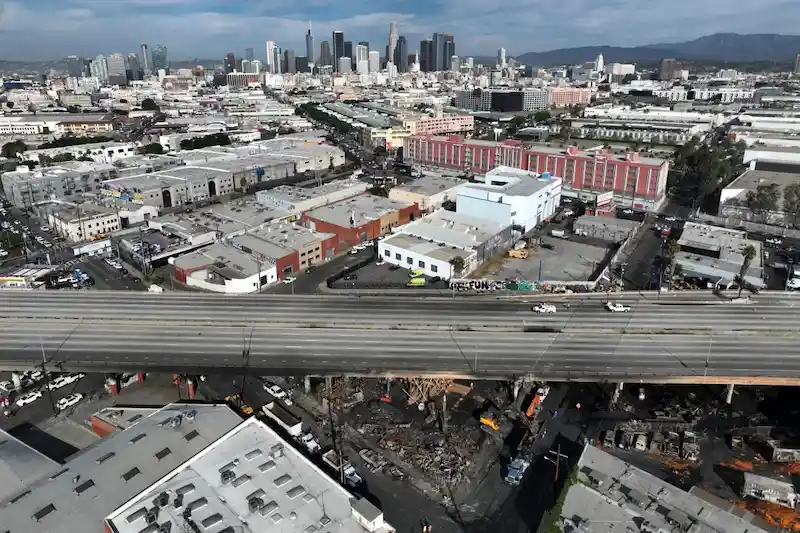


Los Angeles, a city renowned for its notorious traffic congestion, is bracing itself for a prolonged traffic nightmare after a weekend fire forced the indefinite closure of a vital segment of Interstate 10, a major artery south of downtown. The city, already accustomed to epic commutes and freeway gridlock, now faces an even greater challenge as wireless phones buzz with alerts and traffic maps display a network of red lines radiating from the heart of the second-largest city in the United States.
Mayor Karen Bass likened the shutdown of the freeway, which sees approximately 300,000 vehicles passing through daily, to past incidents such as the 2011 closure of Interstate 405, humorously coined "Carmageddon," and the highway damage caused by the 1994 Northridge earthquake. Speaking at a press conference on Monday, Bass acknowledged the disruptive impact of losing this significant stretch of the 10 freeway, stating that it would not only consume time but also affect people's lives and businesses in multiple ways.
This closure encompasses a mile-long section of the freeway in both east and west directions, compelling drivers to divert north of the city center instead of flooding surface streets. The significance of this artery cannot be overstated, as it not only accommodates everyday commuters but also serves as a vital link for trucks transporting goods from North America's largest port complex, especially at a time when holiday season sales are booming.
To mitigate the traffic chaos looming over the city, Mayor Bass called on citizens to utilize public transit or work remotely to prevent further congestion in the center of the city. As investigations into the fire's cause continue, fire investigators and structural engineers are working together to determine the extent of the damage and provide estimates on the timeline required for repairs. Whether a full demolition or repair is needed, clarity on the duration of the closure is expected within the next few days.
Unfortunately, this freeway shutdown comes at a time when downtown Los Angeles is still recovering from the repercussions of the ongoing pandemic. The city has witnessed emptied offices, hotels, and stores while grappling with the expanding homeless encampments. Downtown LA's office vacancy rate has reached 25% in the third quarter, up from 21% compared to the previous year. As more tenants abandon commercial spaces, the vacancy rate for retail properties has also risen to 8.2% from 6.2%. The economic challenges faced by downtown businesses have prompted landlords, including Brookfield Asset Management, to walk away from financially struggling buildings.
Recognizing the severity of the situation, Governor Gavin Newsom declared a state of emergency on Saturday, opening up resources to aid in the repairs of the freeway. However, he emphasized that safety takes precedence over speed in the restoration process. Newsom referenced a previous incident in June where a vehicle fire caused an Interstate 95 bridge in Philadelphia to collapse, leading to significant traffic disruptions along the East Coast. The coordinated efforts of federal, state, and city governments resulted in the reopening of the six-lane stretch after just 12 days. However, the governor cautioned against comparing the two incidents, stating that the current scale of damage in Los Angeles is far greater.
As Los Angeles grapples with the prolonged closure of this crucial freeway segment, the city's residents and businesses will have to navigate through challenging times. With a focus on safety and effective communication, officials are working tirelessly to minimize disruptions and restore normalcy to the city's congested traffic patterns.