


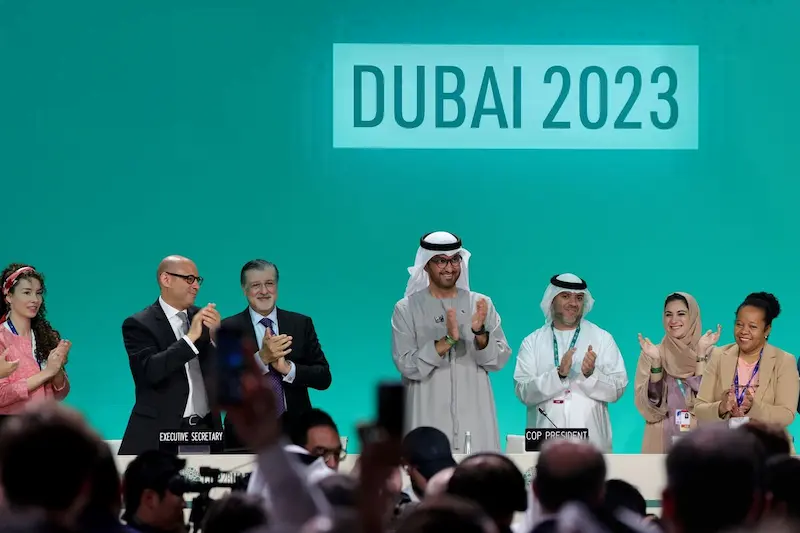


In a historic deal reached during the COP28 climate talks in Dubai, nations around the world have committed to transitioning away from all fossil fuels for the first time. This landmark agreement was brokered by the UAE's Sultan Al Jaber, who served as the president of this year's UN-sponsored summit. The deal managed to find common ground between countries like the US and European Union, which were in favor of curbing fossil fuel use, and oil-producing nations like Saudi Arabia.
The final agreement calls for a swift and orderly shift away from fossil fuels, taking into account the need for a just transition. This qualification helped convince skeptics and garnered global support. Rather than forcing individual countries to make the transition on their own, the agreement emphasizes the importance of countries contributing to a global effort.
The timing of this agreement is significant as it concludes the hottest year on record, which saw devastating consequences such as droughts and wildfires. Sultan Al Jaber, also the CEO of Abu Dhabi National Oil Co., praised the outcome, stating that it sets the world in the right direction. The deal was confirmed by Al Jaber, who brought down the gavel to cheers and applause from the delegates.
While the specific goal of a complete fossil fuel phase-out wasn't achieved, the agreement marks a significant shift. Previous COP texts did not mention moving away from oil and gas, which have long been the backbone of the global economy. However, the actual speed of this transition will be determined by investors, consumers, and national governments. Despite a previous pledge to phase down coal, its consumption has continued to rise, making it challenging to meet the target of limiting global warming to 1.5 degrees Celsius as stated in the Paris Agreement. The new agreement allows for the use of natural gas as part of the transition to cleaner energy.
Nevertheless, the Dubai decision serves as an important milestone in the global trajectory towards a low-carbon energy system. The text also includes commitments to triple renewable power deployment and double efficiency gains by the end of the decade. Additionally, an agreement reached at the start of the summit establishes a fund to address the losses and damages caused by climate change.
However, the success of this agreement lies in its implementation. Action is needed to turn this agreement into tangible results. The language pushing for a decline in fossil fuel use sends a strong signal to investors regarding the future of energy markets. Germany's climate envoy, Jennifer Morgan, emphasized the profitability and long-term viability of renewable energy investments while regarding fossil fuels as stranded assets.
Unfortunately, talks on a new carbon offsets market overseen by the United Nations collapsed after pushback from the European Union and certain Latin American countries regarding stricter standards. Consequently, the launch of this program, which would have helped countries meet their green pledges, will be delayed.
The last-minute agreement is a diplomatic victory for the UAE and Sultan Al Jaber, despite initial controversies surrounding Al Jaber's ties to the oil industry. His role in bringing the oil and gas industry into the COP process drew criticism from climate activists. However, he managed to secure agreements from over 50 companies to reduce emissions from their operations, including a commitment to drastically reduce methane pollution.
Overcoming opposition from oil producers, notably Saudi Arabia, was a significant challenge during the negotiations. The OPEC countries even sent a letter to members urging them to resist any text that targeted fossil fuels directly. Although the final text was softened to reflect their concerns, the coalition of oil producers found themselves isolated and unable to resist the agreement.
While the agreement is seen as a positive step forward, small island nations that are already experiencing the devastating effects of rising sea levels argue that it only takes incremental steps towards phasing out fossil fuels. Concerns were raised about the focus on energy systems rather than the wider economy and the potential endorsement of long-term natural gas use.
In conclusion, the COP28 agreement marks a crucial moment in global efforts to combat climate change. However, the true success of this agreement will hinge on its implementation and the actions taken by investors, governments, and individuals to drive the transition away from fossil fuels towards cleaner, sustainable energy sources.