




In a surprising turn of events, the outgoing Dutch government has decided to withdraw its veto against Bulgaria joining the European Union's passport-control-free Schengen zone. This development, however, leaves Austria as the last remaining obstacle for Bulgaria's accession.
The Netherlands, which had been blocking Bulgaria's bid for Schengen membership for several years due to concerns over the rule of law in the country, has now concluded that Bulgaria meets the necessary conditions for entry. State Secretary for Justice and Security, Eric van der Burg, stated in a letter to the parliament on Friday that the government reached this decision.
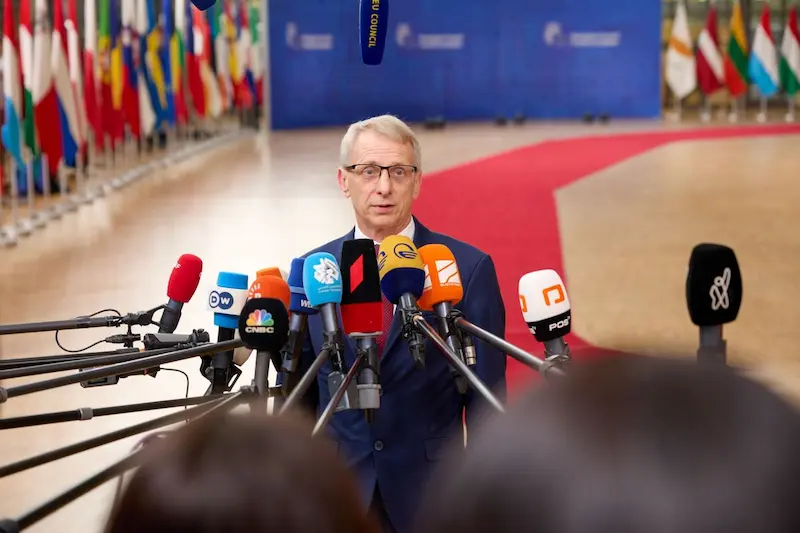
Austria, on the other hand, has been opposing Bulgaria's accession due to increased immigration pressure. However, earlier this month, Austria indicated that it may be willing to reconsider its veto on certain conditions. Bulgarian Prime Minister, Nikolai Denkov, confirmed that talks with Austria are ongoing and suggested that without the Netherlands' decision, these conversations would have been futile.
Nevertheless, it is important to note that the Dutch cabinet's decision can still be overruled by the parliament, especially considering the recent election victory of far-right politician Geert Wilders on November 22, which brought changes to the make-up of the lower house.
This development marks a significant step for Bulgaria, as it has long sought to join the Schengen zone and benefit from the freedom of movement within the EU. The country has made considerable efforts to meet the criteria set forth by the EU, and the lifting of the Dutch veto is a validation of these efforts.
The Schengen zone currently consists of 26 European countries, including most EU member states. It allows for the free movement of goods, services, and people across borders without passport control. Bulgaria's inclusion in the zone would not only benefit the country economically but also strengthen the union's commitment to the principles of unity and cooperation.
There is now hope that Austria will follow in the footsteps of the Netherlands and reconsider its stance on Bulgaria's Schengen membership. As discussions between the two countries continue, it remains to be seen whether Austria will relax its veto and pave the way for Bulgaria's long-awaited inclusion in the Schengen zone.