


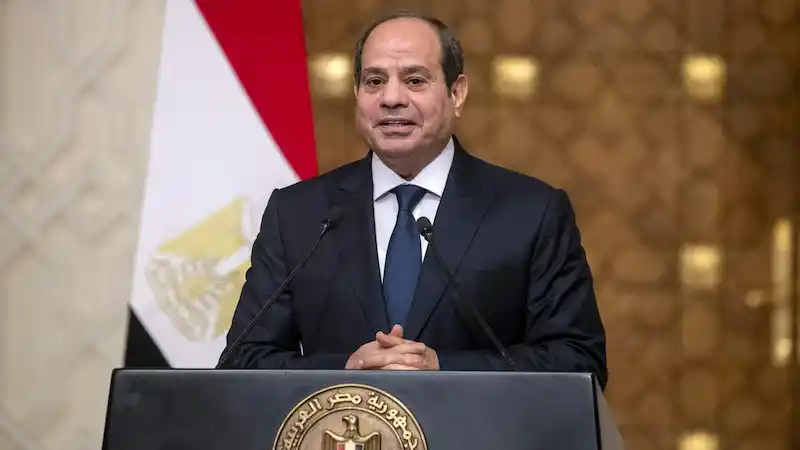


Abdel Fattah al-Sisi has secured his third term as Egypt's president, winning a staggering 89.6% of the votes in an election that lacked serious contenders. The National Election Authority announced the results, solidifying Sisi's power for the next six years. The election took place amidst a struggling economy and concerns about the spillover effects from the conflict in Gaza, which shares a border with Egypt's Sinai Peninsula.
The eruption of conflict in Gaza seemed to have influenced some voters, who saw Sisi as a champion of stability in a volatile region. Sisi has successfully portrayed himself as a reliable leader, which has garnered support from both Gulf and Western allies who provide financial aid to Egypt. The election, held over three days in December, saw a higher turnout of 66.8% compared to the previous presidential election in 2018, which had recorded only 41%.
While three other candidates were technically in the running, none of them were prominent figures. The most significant potential challenger withdrew from the race in October, citing harassment against his supporters by officials and thugs. These allegations, however, were dismissed by the National Election Authority. Critics argue that the election was far from fair and transparent, accusing Sisi of utilizing the entire state apparatus and security agencies to prevent any serious contenders from participating.
Since his rise to power after ousting Egypt's first democratically elected leader, Mohamed Mursi, in 2013, Sisi has implemented a repressive crackdown on dissent across the political spectrum. He was first elected president in 2014, re-elected in 2018 with 97% of the vote, and then benefited from a constitutional amendment in 2019, allowing him to stand for a third term. While some applaud his infrastructure projects, such as the new capital in the desert east of Cairo, others view it as an extravagant endeavor that adds to Egypt's already soaring debt and rising prices.
Supporters of Sisi argue that security is of utmost importance and claim that certain groups have benefited under his rule. For instance, they point to advancements made for women's rights, although critics argue that more substantial reforms are needed. Sisi's regime has made cosmetic gestures to address concerns about Egypt's human rights record, including opening a national dialogue and releasing some high-profile prisoners. However, critics view these actions as insufficient and question their impact on actual systemic change.
Many Egyptians expressed indifference towards the election, as they believed the outcome was predetermined. Reuters reporters who covered the vote noticed instances of people being bussed into polling stations and standing outside with flags and banners, while other polling stations remained relatively quiet. There were reports of basic commodities being distributed to voters as incentives, and some individuals claimed they were pressured by employers to participate. However, the state media body warned that exchanging money or goods for votes is a criminal offense punishable by fines or imprisonment.
As Sisi begins his third term, it remains to be seen how he will address Egypt's economic challenges and navigate the ongoing regional conflicts. His sweeping victory underscores the existing power dynamics and raises concerns about the state of democracy and political pluralism in Egypt.