




The ongoing dispute between Ireland and the UK over the controversial Troubles legislation took a new turn as Ireland announced its decision to take the UK to court. The Irish government has accused the UK of violating its commitments under the European Convention of Human Rights, arguing that the legislation undermines the 1998 peace deal in Northern Ireland. In response, Ireland will initiate an inter-State legal case against the UK at the European Court of Human Rights.
Ireland's Deputy Prime Minister, Micheal Martin, expressed regret that such a step had to be taken, noting that the Irish government had raised concerns and urged the UK to halt the legislation. Martin criticized the UK for acting unilaterally in pursuing the legislation, further straining relations between the two countries.
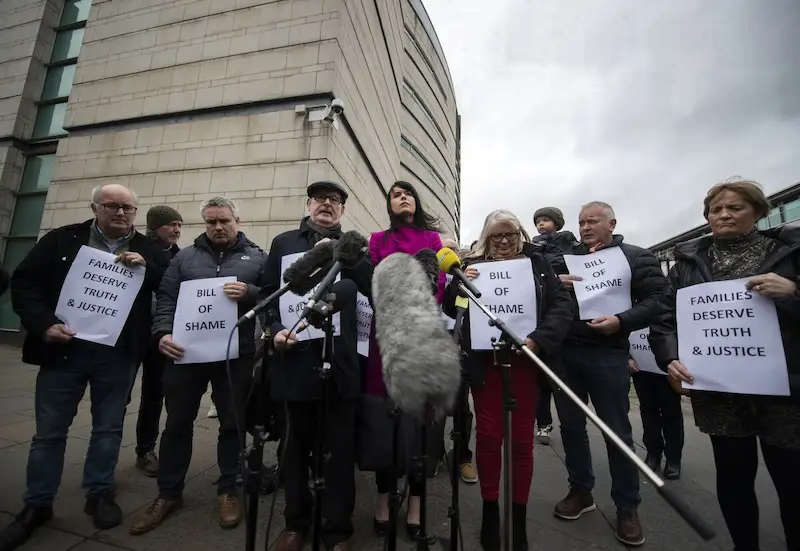
The Northern Ireland Troubles (Legacy and Reconciliation) Act, introduced by former Prime Minister Boris Johnson, aimed at addressing long-standing legacy issues from the Troubles era. It sought to offer immunity from prosecution for individuals who cooperate with a new investigatory commission, providing a fresh start and closure to unresolved cases from that time. However, this sparked anger among victims' families in Northern Ireland, and the government in Dublin accused the UK of disregarding a previous agreement to collaborate on resolving the legacy issues.
This legal action by Ireland comes at a delicate time for Prime Minister Rishi Sunak, whose administration oversaw the enactment of the Troubles legislation. Sunak is already facing pressure from within his own Conservative Party to withdraw from the European Convention on Human Rights. The demands stem from his plan to deport asylum-seekers to Rwanda, a move previously blocked by the court in Strasbourg. However, this broader opposition to the ECHR is rooted in the belief among some Tories that UK laws should be determined solely by the British Parliament.
The risk for Sunak is that Ireland's legal action may embolden those right-wing Tory MPs who advocate for leaving the ECHR, despite the concerns raised by moderate Conservatives. Departing from the convention could undermine the UK's international standing and potentially create challenges in Northern Ireland, as the human rights framework is a significant pillar of the Good Friday Agreement.
The Ireland-UK dispute over the Troubles legislation represents yet another contentious issue between the two countries, reminiscent of the Brexit debates. The outcome of Ireland's legal case against the UK is uncertain, but it highlights the complexities of balancing historical justice, human rights, and political agreements in post-conflict regions.