


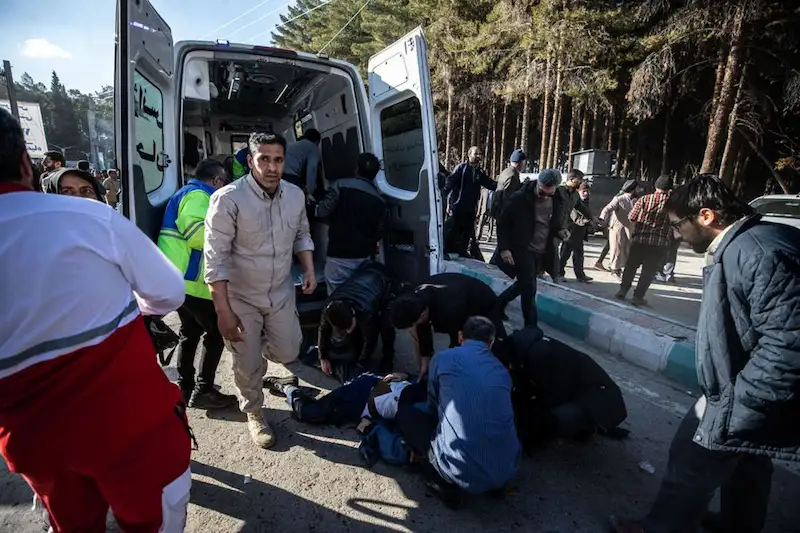


In a recent escalation of tensions, Iran has attributed deadly "terror" attacks in central Iran to its opposition to Israel, pointing to the growing risk of a broader regional conflict. The attacks, which occurred near the grave of Iranian commander Qassem Soleimani, resulted in the deaths of at least 103 people and left 188 others injured. This event followed the killing of a key leader of the Iran-backed Hamas group in Lebanon's capital, Beirut, believed to have been orchestrated by Israel.
While Iran claims that its stance against Israel was the motive behind the graveyard attack, the US State Department has stated that there is no evidence linking Israel to the explosion. They further emphasized that the United States was not involved and dismissed any notions to the contrary. Initial assessments from the US government suggest that the Islamic State or a related group may be responsible for the bombings. Israel's foreign ministry declined to comment on the incident.
These recent attacks mark a peak in regional tensions since Israel initiated its conflict with Hamas, which began after the group infiltrated Israel on October 7, resulting in the deaths of approximately 1,200 people. Since then, Iran's proxy force in Yemen, the Houthis, has launched missiles and drones targeting commercial ships in the Red Sea, while Hezbollah has launched attacks against Israel from Lebanon.
Iran's Interior Minister, Ahmad Vahdi, stated that the explosions in the central province of Kerman were a response to the "axis of resistance" and aimed to kill innocent civilians. The term "axis of resistance" encompasses armed anti-Israel groups and militias in the region. However, Vahdi did not explicitly assign blame to any nation or group for the attacks.
Reports indicate that the blasts occurred within a 15-minute interval near the entrance of the graveyard, where a commemoration ceremony for Soleimani was taking place. The explosions were caused by bombs concealed in a suitcase and a car, which were detonated remotely.
Gholam-Hossein Mohseni Ejei, the head of Iran's judiciary, vowed to hold the perpetrators accountable without identifying the responsible party.
The death of Soleimani in a US drone strike in 2020 raised concerns about a direct military confrontation between Iran and the US, with Tehran eventually unintentionally shooting down a passenger plane. Iran continues to seek vengeance for Soleimani's assassination. Soleimani, as the leader of the Islamic Revolutionary Guard Corps' elite Quds force, held significant influence and played a crucial role in projecting Iran's power abroad through proxy militias opposing Israel, such as Hezbollah and Hamas.
Furthermore, Turkey recently announced the arrest of 33 individuals for allegedly spying on Palestinians on behalf of Israel's Mossad intelligence agency.
At a funeral on Wednesday, the head of Mossad vowed to "settle accounts" with those involved in the October 7 attacks by Hamas on Israel, without providing further details. Iran has denied any involvement in the assaults.
In response to the escalation, Hezbollah's leader, Hassan Nasrallah, stated that while his group has been exercising restraint, they are prepared to fight "without ceilings, limits, rules, or controls" if Israel provokes war with Lebanon.