


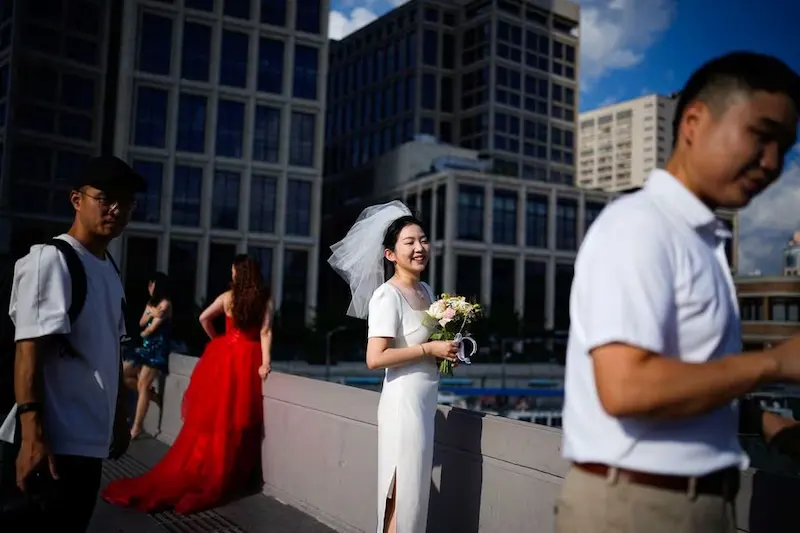


As China's economy slows down and job prospects remain dismal, an increasing number of young people are opting to delay or not enter into marriage altogether. This trend, marked by a record slump in marriage registrations in 2022, is causing concern among policymakers who are already grappling with a decline in birth rates and a rapidly aging population.
In big cities like Shanghai, where the cost of living is high, getting married has become a financial burden for many young Chinese. Victor Li, a 32-year-old Shanghai entrepreneur, expresses his worries about the expense, saying, "It's very expensive for us to get married, especially in a big city like Shanghai. In terms of financial ability, it actually puts a lot of pressure on young people, including me."
Record levels of youth unemployment and chronically low consumer confidence have further exacerbated the situation. The bleak job prospects and uncertain economic outlook have made young people cautious about taking on the financial responsibilities that come with marriage and starting a family.
The decline in marriage rates is particularly troubling for policymakers as marriage and birth rates in China are closely linked. Unmarried mothers are often denied child-raising benefits, and with declining birth rates and an aging population, the country faces the challenge of sustaining its workforce and supporting its aging citizens.
China's fertility rate is currently one of the lowest in the world, raising concerns about the future population decline. Recent data expected to be released on Wednesday is anticipated to show a second consecutive year of population decline, intensifying worries about the country's demographic outlook. In response, President Xi Jinping emphasized the need to "actively cultivate a new culture of marriage and childrearing" to promote national development.
To encourage new families, local governments have implemented various measures such as tax deductions, housing subsidies, and cash rewards for marriages involving brides who are 25 years old or younger. However, these incentives are not sufficient to address the underlying issues that deter young couples from tying the knot.
Julia Meng, who organized a singles event in Shanghai, acknowledges the growing number of individuals aged 35 and older who have given up on marriage. The high cost of living, uncertain job prospects, and the overall economic situation in China have all contributed to the diminishing desire for marriage among younger generations.
Jack Jiang, a 32-year-old entrepreneur attending the event, shares his perspective on the matter, saying, "It's not that we want to be single, it's the urban structure, economic situation that have led to this result." Housing prices, in particular, pose a significant hurdle for young couples, making it increasingly difficult for them to afford the necessary accommodations to start a family.
Addressing the decline in marriage rates and subsequent population decline will require comprehensive solutions. The government and policymakers must consider not only financial incentives but also focus on improving job prospects, reducing housing costs, and creating more stability in the economy. By addressing these underlying economic factors, China may see a resurgence in marriage rates and a boost in population growth, securing a more sustainable future for the nation.