


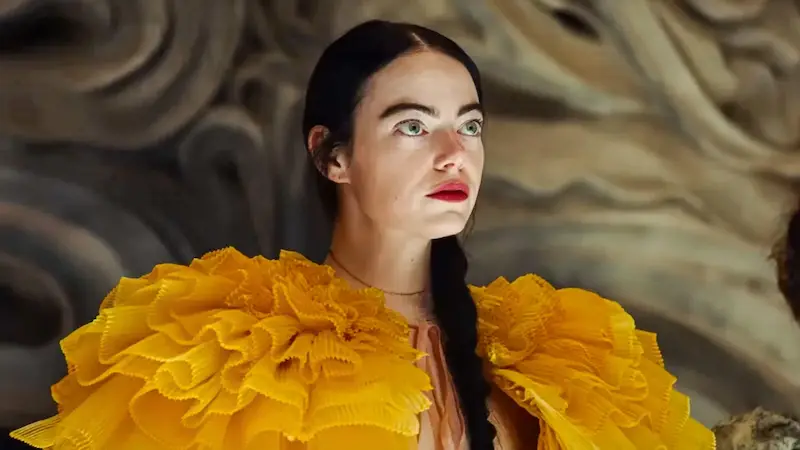


Hollywood actress Emma Stone has come forward to defend the graphic sex scenes in her latest film, "Poor Things," stating that they are integral to her character's storyline. The film, an adaptation of Scottish writer Alasdair Gray's novel, revolves around Stone's character, Bella Baxter, a deceased woman whose brain is implanted with that of an unborn child.
Sex plays a pivotal role in the film, with Bella using it as a means to understand her body and explore how others view it. The character embodies a sex-positive, third-wave feminism, taking her desires to the extreme by turning to prostitution to fund her studies, jokingly proclaiming, "We are our own means of production."
While "Poor Things" has received mostly positive reviews since its release in the US on December 22 and in the UK on January 12, the explicit and numerous sex scenes have drawn criticism from some viewers and critics. BBC Radio 4 host Samira Ahmed, during an interview, described the scenes as "quite graphic" and noted their rarity in contemporary Hollywood.
However, Stone defended the decision to include these scenes, stating that they were crucial to portraying Bella's experience authentically. She emphasized that sex is a significant aspect of personal growth for most people in life, just like discovering food, philosophy, travel, and dance. Stone added that it was important for Bella to be depicted as someone unashamed of her body, who fully embraces every experience without hesitation.
The actress further explained that it felt dishonest to shy away from depicting Bella's sexual journey on-camera or to cut out these scenes due to societal conventions. She believed it was essential to honor the character's full authenticity and not shame her for her exploration of her sexuality. Stone clarified that although she personally didn't have a desire to be naked all the time, she wanted to ensure she portrayed Bella truthfully.
The film's director, Yorgos Lanthimos, echoed Stone's sentiments. He stated that the portrayal of prostitution in the film, as a liberating learning experience for Bella, should not be connected to the harsh realities of exploitation faced by women in real-life situations. Lanthimos emphasized that the story clearly differentiates Bella's personal journey from contemporary or historical prostitution and stands independently as an integral aspect of the film's narrative.
In the end, Stone's defense of the intimate scenes in "Poor Things" highlights the importance of portraying characters authentically and honoring their diverse experiences. By depicting Bella's sexual journey without shame or censorship, the film aims to present a realistic portrayal of human growth and empowerment.